
Ornamentation on Classical Guitar
In this video, CGC Community Manager Dave Belcher walks you through an introduction to ornamentation on classical guitar. First, we’ll look at the three most common ornaments: the appoggiatura, the mordent, and the trill. Then we will introduce you to some basic principles for how to approach ornamentation and answer some common questions.
Be sure to download the ornamentation guide to follow along.
Appoggiatura
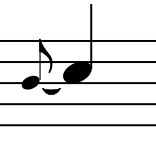
There are many kinds of appoggiaturas in baroque music, but usually it has an emphasis on the first note with tension that then resolves on the second. We might call this the harmonic appoggiatura. There are shorter appoggiaturas (similar to what we today call an “acciaccatura”) but the notation will not always tell you which is which. Musical context will be the deciding factor in terms of how you should play these ornaments.
The exercises for the appoggiatura require you to slur a pair of notes together and each one has a different set of accents. Making the notes accented or even requires control of your slur technique. So these are great slur exercises.
Mordent
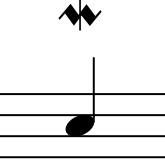
The mordent has a “biting” effect as the name of this ornament indicates. “Mordere” means biting in Italian. In most cases the mordent will feature an ornament that begins on the upper note, moves down to the lower note, and back to the upper note. This all happens in one quick slurred motion. The notation in baroque music will not always tell you whether the mordent is “diatonic” or chromatic. The harmony of the piece will dictate what fits best here. All of the exercises here feature chromatic mordents.
The exercises work up to the full mordent in stages. First, you start out with two slurs, one descending and the next ascending. I would encourage you to make these slurs all even in volume, unlike the harmonic appoggiatura. Keep these very rhythmic, which helps you focus on control of the slur technique. Then, you move up to a full mordent with one right-hand articulation and two slurs in the left hand. Finally, move to the full-speed mordent.
Trill
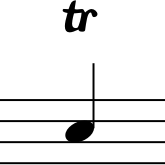
The trill is very similar to the harmonic appoggiatura in that its most frequent use case is dissonance or tension that resolves. These always happen at cadences in baroque music, and of course elsewhere as well. For instance, another kind of trill appears in the two-part invention in G Major (No. 10, BWV 781) by J.S. Bach. Here there are trills in the upper voice that fill out long-held durations. These are meant to be decorative and not cadential or harmonic. In these cases we need very even slurs, unlike the more harmonic appoggiatura-like trills.
Once again the exercises given ask you to use slur technique in the left hand but here with rhythmic speed bursts. You can work on these exercises with even notes or accenting the first note and making each successive alternation weaker. This again helps you develop control.
Barre
Finally, we give you exercises that require you to use ornaments (here slurs) while holding on to a barre with the first finger. This is important as you will encounter this technical challenge frequently in baroque music.
Download the Ornamentation Guide
Basic Principles for Ornamentation on Classical Guitar
Style and period come first
The most important principle regarding ornamentation is that the era and style of music you are playing will dictate how you should perform ornaments. Renaissance, Baroque, Classical, Romantic, and Modern periods all treat ornaments differently.
Moreover, even within a single era there were different styles. Italian, German, and French Baroque, for instance, all treated ornamentation in different ways. So the first and most important step in learning ornamentation is to know the style and period of the music you are playing.
Where ornamentation can become quite complex, however, is that the individual musical context also matters. What is happening in the musical context can help answer questions such as: Should the ornament be on the beat or should it anticipate the beat? Should it take an accent or should it be light and unaccented? Should the trill start on the upper note or the principal note?
While we have inherited certain rules for ornaments, often these come from later periods and so it is always better to investigate the context of the music and let that help you decide what would fit the music best.
Ornaments are not always marked with symbols
Ornaments often appear as symbols in the music. But some composers also wrote ornaments directly into the texture of the notation. In other words, ornaments are sometimes hiding in plain sight. So part of learning ornamentation is learning how to recognize ornaments in your music even when no symbol is present.
That ability takes time, experience, and knowledge of style.
The decorated note is usually more important than the decoration
The general approach to ornamentation has usually been that the notes or lines being decorated are more important than the decorations themselves. That gives you one of the first practical challenges in playing ornaments well: the ornament must often be light enough that it does not stand out too much from what it is decorating.
This is easy to lose sight of on the guitar, where plucked notes can easily sound separate and emphatic. But in many styles the point is not for the ornament to draw attention to itself as an isolated event. The point is for it to decorate a note or line without overwhelming it.
Rhythm is central to ornamentation
Rhythm is a vital component of ornamentation. When you add an ornament to a note, it takes rhythmic value from that note. Starting with C.P.E. Bach in the Galant or early Classical period, there were certain rules governing this. An appoggiatura added to a duple note, such as a quarter note, eighth note, or sixteenth note, would take half of that note’s value. An appoggiatura added to a triple note, basically anything with a dot, would take up to two-thirds of its value.
Practically, that means that if you add an appoggiatura to a quarter note, the appoggiatura takes half of the quarter note’s value, leaving the two notes to divide the original duration equally. So instead of one quarter note, you now have an appoggiatura worth one eighth note followed by the principal note worth one eighth note.
In the Renaissance and Baroque periods, however, the question of how much rhythmic value should be deducted from the principal note was not always so cut and dry. Sometimes the ornament took less than the later Galant or Classical rules would suggest, and sometimes it took more.
Even so, one principle remains especially important: when you add an ornament, you must be careful not to add time. Whatever the original duration of the principal note is, that is the total amount of time available for the ornament plus the principal note together. The exception would be at a cadence when you are adding rubato or ritenuto, as in a cadential trill. But technically that is a matter of tempo slowing, not the duration of the written note changing—those are different things.
Ornaments often increase the technical difficulty
Once you take rhythmic value from one note and use it to add another note or multiple notes, the resulting figure automatically becomes faster than the original note was. For that reason, ornaments often become virtuosic very quickly. Even a passage that seems simple before ornamentation can become significantly more demanding once the ornament is added. That is one reason ornaments start out at around a Grade 3 level.
Another practical consequence is that you may need to re-finger the passage. A fingering that works perfectly well for the plain version of a line may not work once an ornament is introduced. So ornaments do not simply add expressive detail. They also often alter the technical problem you have to solve.
Some Questions about Ornamentation
Do I have to play ornaments in Renaissance and Baroque music?
While ornaments are stylistic, they are completely optional. It is okay to play early music without ornaments. However, you should know that, while ornaments are mostly decorative, they can provide a melodic and/or connective function at times and so leaving ornaments out can have an effect on the music.
Regardless of whether you prefer to play ornaments or not, it is a good idea to learn to play the music by first leaving out the ornaments. This allows you to learn the rhythmic and melodic structure. Then, when you add the ornaments back, you can be sure you don’t affect the music either with unwanted accents or rhythmic inaccuracies.
Can I add ornaments when the composer does not specify them?
The short answer is that you may do whatever you like. Whether you should add ornaments when none are specified is a different question.
It is largely a matter of taste. Some listeners and players will find a piece executed exactly as specified by the composer too wooden and rigid. Others will find a performance with many added ornaments and embellishments too free, perhaps even arrogant. A middle ground often makes sense, but once again that middle ground should be guided by knowledge of style and context.
Knowing the style of the music helps you make better decisions here. Knowing something about what a composer expected from performers helps as well. Some composers left more room for performer freedom than others. Some expected tasteful additions. Others were more explicit.
How important is what the composer wanted?
Let’s take Bach as an example. While he did use some symbols for ornaments, more often he tended to write out his ornaments in full. The result was to remove some freedom from the performer to maintain what he considered to be good taste. And this was something that caused some consternation from his contemporaries, some of whom thought his restrictions made the music too “turgid.”
Other composers understood their scores more like a sketch, expecting the performer to add graceful and tasteful ornaments where they saw fit. This left much more freedom to the performer than did the music of Bach (the French, such as Couperin, are great examples of this).
So having some knowledge of what a composer expected can help guide your decisions. This does not mean you can never depart from those expectations. You may still choose to add a tasteful ornament here or there. But being informed about the composer’s practice gives you a more reliable basis for deciding when that might be appropriate.
Should a trill start on the upper note or the principal note?
An important common question about Baroque ornamentation in particular is whether a trill should start on the upper note or the principal note. Many writers (such as Frederick Noad, for instnace) have noted a “penchant” for dissonances that resolve in the Baroque period, thus favoring upper-note trills (and long harmonic appoggiaturas as well). While this is true in general, as with all ornaments, it is important first to understand what the trill is doing in the context of the music. What is its function? Is it a melodic trill? Is it a harmonic cadential trill creating tension and resolution? How you answer these questions will affect how you should play the ornament. Before deciding whether it should begin on the upper or principal note, you should first understand what sort of trill it is and what it is accomplishing in that passage.
Let’s take two simple passages as examples.
Españoleta by Gaspar Sanz

First, the Españoleta by Gaspar Sanz has a trill on beat 1 of measure 1. Should it be an upper-note trill or a principal-note trill? Well, the trill is not performing a harmonic function; that is, it is not at a cadence. In fact, it is the first notes of the piece. It introduces the initial harmony. Moreover, the pickup notes (the anacrusis) lead to C melodically. So starting on the D (the upper auxiliary) disrupts the melodic line. On this basis we could justifiably recommend a principal-note trill.
In certain other instances, however, the note just before the trill will already be the upper note, the dissonance. And we have examples where composers have specified that a principal-note trill is appropriate in these cases because the upper auxiliary that comes on the note just before the trill is technically starting the trill early.
Bourrée by J.S. Bach

Our second example comes from the Bourrée by Bach from the first lute suite. At the end of the first section we have a cadential trill, a trill that functions harmonically to support a dissonance that resolves to a consonance in the harmonic structure of the music. Or, to put it more simply, we have a V-I cadence. The upper auxiliary (G) happens just before the beginning of the trill on F#. So it makes sense that we should play a principal-note trill in this instance.
However, while this makes sense on other instruments, it is not always possible on the guitar to make these notes belong together in the same way. On flute, violin, voice, and harpsichord, it is easier to avoid accents in the middle of a trill. On flute and voice, the notes of the trill are supported by one continuous breath. On violin, they sit inside one sustaining bow motion. On harpsichord, dynamic contrast is practically non-existent due to the mechanics of the instrument.
And what that means is that on all of these instruments a principal note trill preceded by the upper note just before the trill begins can sound like one gesture, a dissonance resolving to a consonance.
Avoiding unwanted accents
On plucked instruments, however, it is very easy to create accents that interrupt a trill because we have two “plucks”: one for the upper note before the trill begins, and another at the beginning of the trill on the principal note. In some cases we can use slurs to resolve this issue, but in others we cannot. That’s just the nature of the instrument.
What we could do, however, is use a cross-string (or right-hand) trill, which avoids the issue of unwanted accents and allows for a seamless connection between the upper note and a principal-note trill.
Can I mix left-hand (slurs) with right-hand (cross-string) trills/ornaments?
So-called cross-string or right-hand trills were first developed by the Presti-Lagoya Duo, who needed a way to play rapid alternating trills in imitation of the keyboard for many of their baroque keyboard arrangements. The technique they developed was to play trills entirely with the right hand.
Later, David Russell developed a fingering that has become nearly universal for this technique: a-i-m-p. This has made rapid alternations of the trill (and also of mordents) possible on the guitar in a way that they simply were not on the lute, where left-hand slurs always have a dynamic decrescendo. Russell’s recommendation is to use this technique for Baroque music originally written for the keyboard.
But can you mix cross-string and left-hand ornaments in the same music? In my opinion we should utilize the strengths of our instruments, which includes both kinds of ornaments. They do sound different, however, and so it is important to use your ear to guide you and to ensure that your ornaments sound consistent and musically appropriate.
And that is an important general point about ornaments that we can close with: the best guide for how to perform ornaments will be your ear. Yes, it is important to be stylistic, to allow the ornaments to fit the musical context. But if they don’t sound good, what’s the point?
***
We hope this has been a useful introduction to ornamentation on classical guitar for your own practice and playing. At CGC Academy we have a full in-depth course on ornamentation in the music of J.S. Bach. Join CGC Academy to get full access today!
Great lesso ! Thank you!
Marty
Thanks, Marty!
Peace,
Dave B (CGC Team)
Excellent content and well presented. Although much of the music that employs such ornamentation is beyond my ability (level 3) at this time, the knowledge and practice will serve me well when the time is right.
Thank you for the nice comment, Stephen! The slurs technique that you’ll be encountering starting in Grade 3 will really help get you prepared for working on ornaments, so this will indeed still be helpful. Best wishes!
Peace,
Dave B (CGC team)
Good to know. Thanks, Dave.
Thank-you for your expertise on this exciting topic Dave. Your presentation was exceptional.
Claudia
Surrey
British Columbia
Thanks Dave. Ornamentation is still in my future as I begin Grade 3 but I have always found it interesting but mysterious because past teachers never brought the topic up and I found it difficult to identify those unique symbols in the manuscript. Even the definition of the terms seemed somehow secretive, almost cult like. Onward and upward we go!
Bob
Great lesson and I really like how much context you’ve added to the video. Maybe in the future you could do a closer look at the specific period ornaments for the different instruments used in the Renaissance and Baroque period. I been planning it but it keeps getting put on the back burner. Maybe it’s too big of a topic for online? Anyway, great introduction.
I THINK YOU ALL AT CGC ARE FABULOUS! SO
Thank you for a great lesson. The middle finger of my left had is arthritic and after a while my left hand ends up feeling quite stressed. So I just stop and give it a rest. I do use a topical anti-inflammatory gel which helps to ease the strain.