
In this lesson
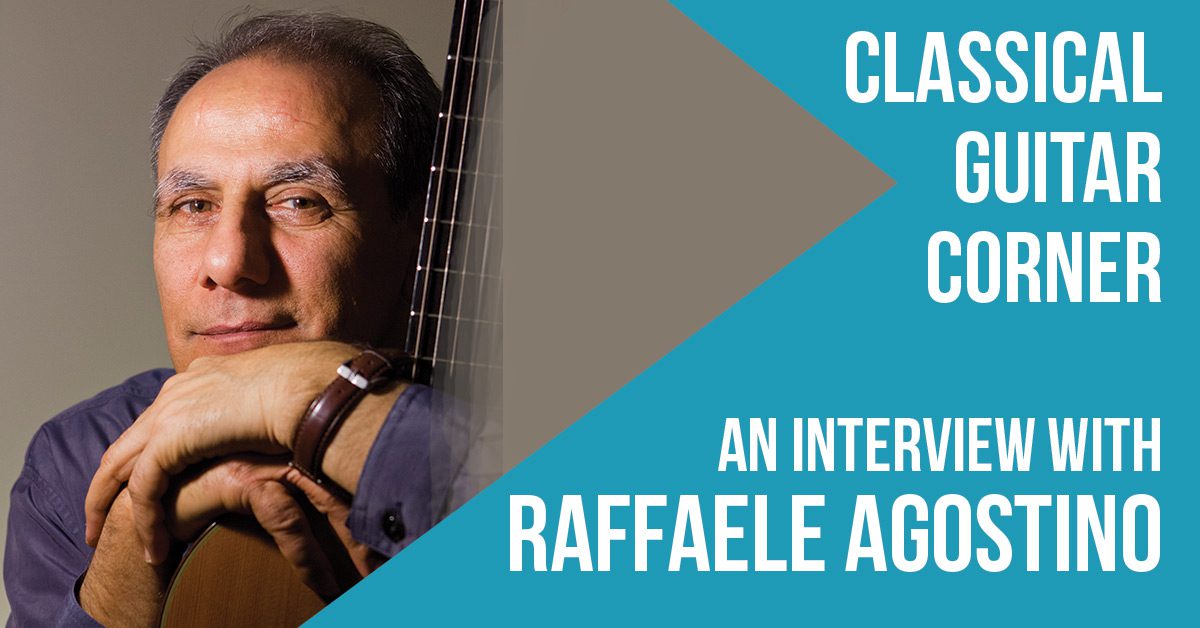
Raffaele Agostino, one of Simon Powis’s formative teachers, discusses the craft of teaching. The conversation asks what a performer needs to learn when responsibility shifts from improving their own playing to helping another person develop.
His examples connect observation, clear explanation and patience. They also offer students a way to recognise purposeful teaching: a lesson should help them understand what they are doing and why, rather than simply imitate a result.
Podcast: Play in new window | Download
Subscribe: Apple Podcasts | RSS
Originally published in 2016. These listening notes draw on the recorded conversation. Roles, projects, releases and event announcements refer to the time of recording. Practical reflections are suggested applications, not additional quotations from the guest.
Explore the conversation
Use these approximate timestamps to jump to a topic in the recording.
- 9:12 — Teaching develops through observation and feedback
- 16:09 — Another student’s lesson reveals another way to explain
- 22:10 — Understanding rhythm means being able to explain it
- 24:58 — A strong foundation supports later repertoire
- 26:43 — Other musical experiences can strengthen guitar playing
Teaching develops through observation and feedback
Agostino recalls an apprenticeship that included observing lessons on several instruments. Singing, piano and wind teaching provided examples of how experienced teachers introduced ideas and responded to students.
He later took over short portions of lessons and received feedback. One memorable example concerned explaining dotted notes more concisely: a correct explanation still needed to use the lesson’s time well.
The account shows why being a capable player is not the whole preparation for teaching. Observing what another learner understands, choosing an explanation and evaluating its effect are separate skills.
Another student’s lesson reveals another way to explain
Agostino encourages students preparing to teach to observe their peers’ lessons. A good teacher adapts an explanation to an individual, so the lesson you receive yourself is only one example of how that teacher works.
The repertoire need not be something the observer intends to play. The valuable subject is the process: how a question is asked, a difficulty is identified or an explanation is adjusted.
When attending a masterclass, choose one teaching interaction to follow closely. Notice what changed between the first attempt and the next, and which instruction appears to have helped.
Understanding rhythm means being able to explain it
“take the time to make sure that rhythm is always correct and understood”
— Raffaele Agostino, 22:55
Agostino describes working carefully through subdivisions so students understand the relationship between note values. Knowing how a familiar piece sounds is not always the same as knowing why its rhythm works.
That distinction becomes especially important when teaching someone who has not heard the piece. An explanation needs to make the structure available without relying on imitation alone.
Take a short unfamiliar rhythm, identify a useful subdivision and count it away from the guitar. Then add the notes while preserving the relationship. The aim is an understanding you can transfer to another piece.
A strong foundation supports later repertoire
Agostino describes students who arrive with ambitious pieces but gaps in their earlier experience. Established studies and carefully selected material can reveal and address those gaps.
His image is a pyramid that needs a broad base. A small amount of foundational work cannot indefinitely support an increasing load of difficult repertoire.
For a student, returning to a simpler piece is useful when it allows a skill to become clearer. Choose the material for the specific task it helps you learn, rather than treating its apparent level as a judgement on your overall ability.
Other musical experiences can strengthen guitar playing
“Then everybody should sing”
— Raffaele Agostino, 27:56
Agostino imagines an education that includes melodic instruments, harmony, singing and percussion. Each activity makes a different aspect of music tangible.
A guitarist managing several notes at once can lose the sense of a continuing melodic line. Singing or playing a single-line part can draw attention back to its shape, while ensemble experience develops listening across parts.
You do not need to begin several new instruments at once to explore the principle. Sing the melody of a short guitar passage, clap its rhythm or listen to one part of an ensemble. Then return to the guitar and retain that clearer musical image.
Ideas to take into your own music
These prompts are reflections on the conversation, rather than a routine prescribed by the guest.
- Observe a teaching exchange: notice which explanation changes the next attempt.
- Explain a rhythm: count its subdivisions before playing.
- Strengthen one foundation: choose a manageable study for a specific skill.
- Sing a line: reconnect the notes with a continuous musical phrase.
Original episode notes and resources
The original introduction and resources are retained below. Any time-sensitive announcements belong to the episode’s publication period.
Raffaele Agostino is an Italian/Australian guitarist that has dedicated his life to sharing music. Be it on the concert platform or through his teaching and mentoring of students, Raffaele has been a dedicated ambassador of the arts and classical guitar.
Raff and I have had many conversations over the years on a number of topics and when I asked him to contribute to the CGC podcast he came up with a topic that not too many people talk about and that is finding your way as a young teacher.
Many of us are concerned with how to play or how to improve our own skills but it takes some foresight to think about how we are going to educate others in our lifetime. I can say that when I first started teaching I was relatively clueless about how to communicate effectively and I wish I had listened to this conversation when I was still an undergrad…
As always, another excellent podcast. I am not familiar with university studies in music but I have seen and heard so many talented young musicians and realise only a small percentage of them will actually be able to pursue a full time concert career. Besides talent, an international stage career might also have to do with marketing and a bit of good luck – winning the right competition, or simply being in the right place at the right time. Considering this, a university should just as well be responsible for giving students something to fall back on. Teaching, as we hear in this podcast, is a logical alternative.
I discovered classical guitar as a young adult and therefore approached the instrument from a purely recreational point of view with no intention of a career. Nevertheless, it seems to be natural if you have been playing for a while and perform occasionally here and there, you will be asked to teach children by their parents or other adults, who themselves would like to learn. This led me to “dive into the deep end” and start teaching a few students some years ago. Lucky for me here in Germany there are pedagogy courses offered by the national German Association for Plucked Instruments (Bund deutscher Zupfmusiker) specifically for players who have not studied music. These are not singular courses – in guitar pedagogy, and also in music theory and history – but programs spanning a period of 12 to 18 months, culminating in written and practical examinations. There are associations of this kind in other countries, e.g. the American Guitar Foundation in the U.S. If this is not already a part of their offerings, they might consider starting a similar program.
Well done Simon Raf and Janet
Good wisdom imparted in both podcasts in an easy to assimilate format. Loved listening to Raf’s knowledge and putting musicality into perspective.SCGS Orchestra rehearsals start in a few weeks with Raf and Janet. This podcast learning will help in orchestra study and playing.
Simon, best wishes for a successful 2016 and see you down under on your next trip.
Regards Greg