
In this lesson
Frederic Hand returns to the podcast to discuss his own music through recordings and conversation. Comparing different versions of a work reveals what changes when a musical idea moves between solo guitar, lute and a larger ensemble.
The episode offers an unusually direct view of a composer’s process: an initial idea, the influences behind it, the contributions of other players and the practical decisions that make a recording possible.
Podcast: Play in new window | Download
Subscribe: Apple Podcasts | RSS
Originally published in 2016. These listening notes draw on the recorded conversation. Roles, projects, releases and event announcements refer to the time of recording. Practical reflections are suggested applications, not additional quotations from the guest.
Explore the conversation
Use these approximate timestamps to jump to a topic in the recording.
- 8:08 — A title can follow the music rather than explain its origin
- 10:29 — A guitar work may contain an imagined ensemble
- 16:55 — A recording can invite the listener close to the instrument
- 24:51 — Improvisation and composition can share the same work
- 38:49 — A musical tribute can reflect a person’s interests
- 51:11 — A melody can be a starting point for personal interpretation
A title can follow the music rather than explain its origin
Hand describes Prayer arriving as a musical idea before it had a title. After writing it, he heard a prayer-like quality and chose the name. He does not attach a specific religious programme to the composition.
The discussion also acknowledges Bach’s influence on his musical thinking. Recognising an influence afterwards is different from setting out to imitate a particular work.
For a listener, a title can open an association without prescribing one fixed interpretation. Hear the movement of the voices and the character of the phrases before deciding what story the piece must tell.
A guitar work may contain an imagined ensemble
“Very often, I’m hearing an orchestrated version and then figuring out how can I do that on the guitar.”
— Frederic Hand, 11:10
Prayer began as music for two guitars, but Hand describes hearing an orchestrated sound behind the instrumental version. A later recording gave him an opportunity to realise that broader conception.
The episode compares ensemble and solo presentations. The change is more than the number of players: different instruments can sustain, separate and colour lines in ways one guitar must suggest.
When listening to the solo version, imagine which line might belong to a wind instrument and which might supply an accompaniment. That imagined orchestration can also help you shape voices in your own guitar repertoire.
A recording can invite the listener close to the instrument
The discussion of microphones and the studio concerns the sound of this particular recording. Hand describes combining different microphone qualities and choosing a relatively intimate perspective.
He also recognises the appeal of a concert-hall recording. These are different aesthetic possibilities, rather than a single correct sound or an equipment recipe that works everywhere.
Compare two recordings you enjoy and listen to the space around the instrument. One may emphasise detail and proximity, another the way a phrase fills a room. Noticing that difference helps separate the performance from the recording perspective.
Improvisation and composition can share the same work
“It was very much in terms of the arranging of it a collaborative effort.”
— Frederic Hand, 27:49
Hand describes combining medieval material, changing metres and improvisation in Jazzantiqua. Different sections could provide different material for improvising, rather than repeating one set of changes for each player.
The ensemble’s work also involved a division of responsibilities. Some melodic material was composed, while other musicians contributed through improvisation and decisions made in rehearsal.
This gives the listener another question to follow: what holds the music together while allowing a player freedom? Listen for a recurring rhythm, a harmonic setting or a return to a recognisable idea.
A musical tribute can reflect a person’s interests
For Julian was written for a celebration of Julian Bream and originally conceived for eight-course lute. Hand later found qualities in the guitar version that he particularly liked, even though the instruments could not reproduce every feature identically.
He describes thinking about Bream’s musical presence: the exploration of new compositions alongside his work with Elizabethan lute music. Those two interests helped shape the tribute.
The example shows how a dedication can inform a piece without quoting a performer’s repertoire literally. Listen for the relationship between older references and contemporary harmony or rhythm.
A melody can be a starting point for personal interpretation
In discussing Sephardic songs, Hand describes working from single-line melodies and supplying a harmonic setting. The recorded result reflects both the source and his own musical background.
He also acknowledges that students respond differently to arranging and composing. An open creative task can be exciting for one person and frustrating for another, particularly when its purpose is unclear.
If you want to explore the idea, begin on a small scale: sing a familiar melody, identify a place of rest and try a simple accompaniment. The purpose can be understanding the melody more deeply, without an obligation to produce a polished arrangement.
Ideas to take into your own music
These prompts are reflections on the conversation, rather than a routine prescribed by the guest.
- Compare versions: hear what changes between a solo and ensemble presentation.
- Imagine instrumental roles: give separate voices distinct musical characters.
- Notice the recording perspective: distinguish intimacy from concert-hall space.
- Explore one melody: try a small harmonic or rhythmic variation and listen to its effect.
Original episode notes and resources
The original introduction and resources are retained below. Any time-sensitive announcements belong to the episode’s publication period.
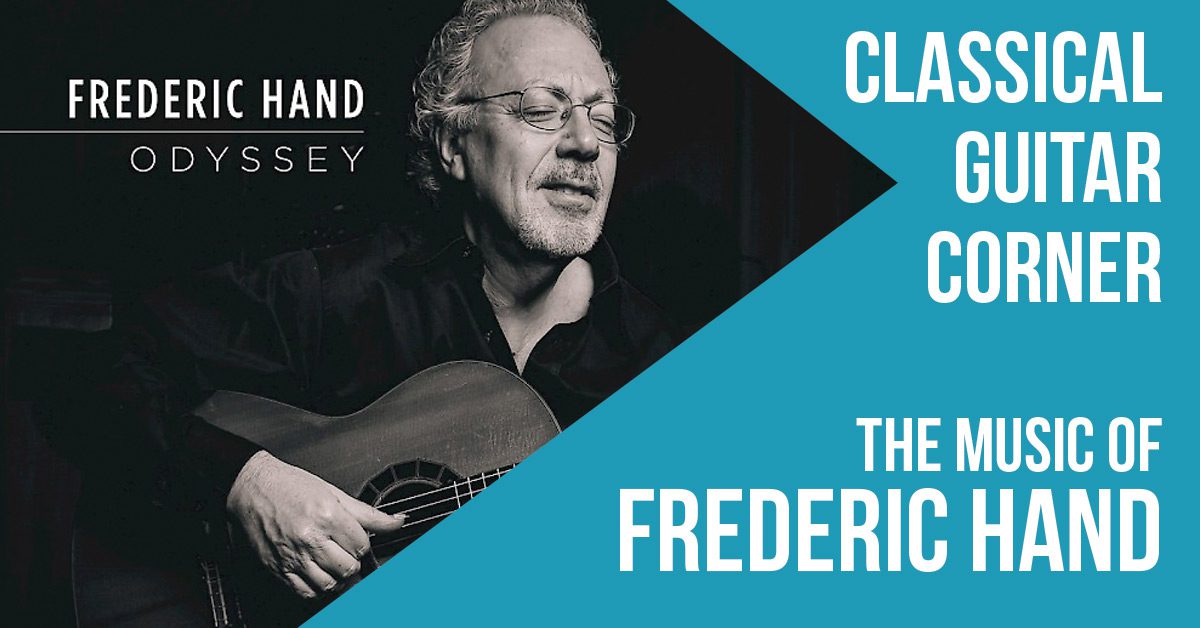
Frederic Hand shared some wonderful stories and insights into his world in episode 26 of the Classical Guitar Corner Podcast. In this session we had a chance to sit down and go through some recordings of his own compositions. We looked at a variety of his pieces for solo guitar and also for ensemble, we also featured several works of his new recording “Odyssey” which can be found on Fred’s website and digitally through all major distributors (iTunes, Amazon etc.)
Here is the link to the store on Fred’s website:
http://www.frederichand.com/store/
If you enjoyed this format please let me know in the comments below!
Hi Simon,
I loved this format: listening and discussing a composer’s music with the composer himself (or a performer’s music with the performer). It provides very interesting insights. Also there was nice chemistry between you and Fred. Very nice podcast indeed :)
Hey Simon,
I enjoyed this podcast immensely; Fred is always a wonderful guest and I look forward to future episodes using this format.
Great job!
First off – I’m looking forward to Frederic Hand being at Guitoberfest this year!
Secondly, this is a wonderful format. I think Michele’s comment about a similar talk with a performer is true. It would be very interesting indeed, to hear a performer’s ideas behind their interpretation of certain pieces.
Thank you for another great podcast.
Really enjoyed this episode! Loved hearing the insights of the performer/composer along with the music.
What an inspiration!
Fred is an amazing musician in the fullest sense.
I’ve learned much from both interviews.
Thanks for introducing us to him.
A.most enjoyable and insightful hour with Fred Hand. I’ve always enjoyed his music as well as the man. Thanks
for the opportunity to relive his performances and the insight of his thoughts.
Bill Braunstein
HI Simon,
I found this podcast enthralling. I really enjoy listening to musicians of Frederic Hand’s quality talk about how they perceive the music they write and what inspires them, and I wasn’t disappointed . . fantastic!
I liked the informal format, which made for easy listening.
Chris
PS I felt sometimes that the style of music, especially the jazz, was very akin to listening to Andrew York. Who’s piece called “Starburst” I absolutely love.
I enjoyed this interview with Fred Hand very much (listened to while I was out for a run!). He certainly has a diatonic and melodic style that make his music accessible and appealing (a “sunny” disposition), and his use of added tones to chords provides harmonic sophistication appropriate for classical audiences. Your gentle probing and informed comments and questions brought out the best in this interview.
For suggestions for future podcast ideas, perhaps doing one on Canadian classical guitarists might be an idea, starting with Eli and Anne Kassner and working down from there. Now with the political circus in the USA, perhaps a nod to the north might be in order! :>)