
In this lesson
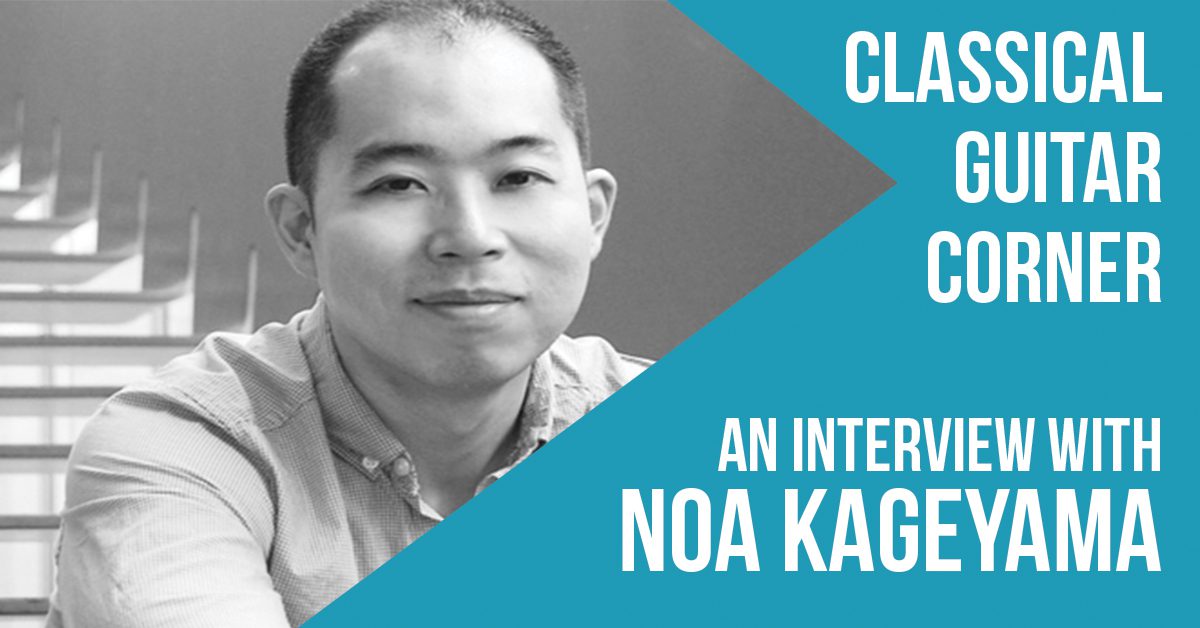
Noa Kageyama, the musician and psychologist behind The Bulletproof Musician, joins Simon Powis to examine the gap between practising a piece and performing it. The conversation begins with his own frustration: spending more time with the violin did not automatically produce the improvement he expected.
The most useful thread for guitarists is how to make preparation more specific. Kageyama distinguishes deciding what the music should sound like, learning how to produce it and practising the experience of performing. He also answers questions from adult learners about focus, repetition and keeping repertoire in rotation.
Podcast: Play in new window | Download
Subscribe: Apple Podcasts | RSS
Originally published in 2016. These listening notes draw on the recorded conversation. Roles, projects, releases and event announcements refer to the time of recording. Practical reflections are suggested applications, not additional quotations from the guest.
Explore the conversation
Use these approximate timestamps to jump to a topic in the recording.
- 6:21 — More time is not the same as a different approach
- 19:52 — Prepare the sound, the movement and the performance
- 23:07 — Plan what you want to listen for while playing
- 28:18 — Look beyond the number of hours
- 32:21 — Return to a passage after working on something else
- 43:33 — Use a recording to choose next week’s priorities
- 47:54 — Leave room for the pleasure of playing
More time is not the same as a different approach
Kageyama recalls increasing his practice time without seeing the change he hoped for. He began to suspect that the missing ingredient was a different kind of work, rather than simply more of the same.
A class with Don Greene introduced him to questions about preparation and performance that he had not previously encountered in that form. The experience helped lead him from violin studies towards further study in psychology.
A practical question to bring to your own session is: what will this repetition change? If the answer is unclear, pause to identify a specific problem or musical aim. That small decision makes it easier to judge whether the next attempt was useful.
Prepare the sound, the movement and the performance
“being able to perform under pressure the very first time is something that also needs some practice”
— Noa Kageyama, 21:46
Kageyama describes three complementary aspects of preparation. Conceptual work establishes the sound and interpretation you want. Technical work explores how to produce it. Performance practice tests what happens when you have to bring the elements together in a run-through.
He cautions against measuring readiness only by a passage that has just been played several times. A successful repetition after multiple adjustments may tell a different story from a first attempt in front of someone else.
Choose a short piece or section that is ready for this kind of test. Record one uninterrupted attempt and listen afterwards. Use the result to identify what needs attention, rather than treating every run-through as a verdict on your ability.
Plan what you want to listen for while playing
The conversation considers not only what the hands should do, but what should occupy the player’s attention. Kageyama describes the unplanned commentary that can appear during a performance: noticing an error, anticipating a difficult passage or wondering what listeners think.
He suggests directing attention towards a musical intention, such as a sound, a phrase shape or the relationship with another player. This is something to explore during preparation, rather than invent for the first time on stage.
For a familiar phrase, choose one clear musical cue: hear the melody arriving at its destination, for example, or listen to the balance between two voices. Try the cue in a run-through and assess whether it helps you stay connected to the music.
Look beyond the number of hours
“not all practice is created equal”
— Noa Kageyama, 30:27
Discussing deliberate practice, Kageyama argues that the popular focus on a target number of hours can obscure the more useful question of what happens during those hours. Playing, repeating and working deliberately on an improvement are not interchangeable activities.
He also separates developing a skill from being able to demonstrate it in a performance situation. Both deserve attention; a technical exercise and a complete run-through may have different purposes within the same week.
Give one passage a defined goal, such as a more consistent rhythm or a clearer melody. Decide how you will listen for progress, try a specific adjustment and assess the next attempt. The point is to make the work observable, not to fill a quota.
Return to a passage after working on something else
Kageyama introduces interleaved practice: moving between passages or tasks, then returning to an earlier one. He contrasts this with repeating the same passage until it feels comfortable in the moment.
In his explanation, returning requires the player to retrieve the approach again rather than relying on the adjustments accumulated over immediately preceding attempts. He acknowledges that this can feel less satisfying than a run of increasingly fluent repetitions.
Try a small comparison with material you already understand. Work briefly on one phrase, move to a second, and then return. Notice what you can recover and what you still need to clarify. Treat this as an experiment in organising practice, not a requirement to change tasks constantly.
Use a recording to choose next week’s priorities
Responding to a question about scattered practice, Kageyama suggests noticing what interrupts attention and setting clearer priorities. He also describes using a run-through to discover which difficulties matter most under performance conditions.
That recording can guide the following week: select a manageable problem, devise a way to work on it and review the result in another run-through. The comparison makes progress more specific than an overall feeling that the piece is getting better or worse.
A brief practice note is enough to begin. Record the passage, the problem you heard, the approach you tried and what you want to check next time. Keep the plan small enough that it supports playing rather than becoming another large task.
Leave room for the pleasure of playing
A listener asks whether to keep returning to a much-loved piece or put it aside. Kageyama makes room for enjoyment while also asking whether the time spent on that piece has a clear improvement goal.
He suggests creating attainable performance opportunities, including a recording or playing for family. These can provide direction for preparation without requiring a formal recital or a professional ambition.
Separate the purposes within your own session. You can play something because you love it, work carefully on one unresolved detail, and prepare a short piece to share. Naming those different purposes helps you make a deliberate choice about how to use your time.
Ideas to take into your own music
These prompts are reflections on the conversation, rather than a routine prescribed by the guest.
- Define the next improvement: give a repetition a purpose you can hear.
- Practise performing: include occasional uninterrupted attempts and review them afterwards.
- Choose a musical cue: decide what you want to listen for in a phrase.
- Revisit a passage: notice what happens when you return after another task.
- Balance work and enjoyment: make room for both deliberate improvement and music you love.
Original episode notes and resources
The original introduction and resources are retained below. Any time-sensitive announcements belong to the episode’s publication period.
Dr. Noa Kageyama is a concert violinist who did his studies at Julliard School of Music, but he is also a psychologist and the author of a prominent music blog called “The Bulletproof Musician.” Noa uses both his background in music and in psychology (especially in conversation with sports psychology) to work with musicians to reach their peak performing ability. Noa will be one of the guests for this year’s Guitoberfest, along with Fred Hand and Gohar Vardanyan, so we’re excited to introduce him and his ideas to the CGC community.
In episode 33 of the CGC Podcast, Noa guides us through some really insightful conversation about performance anxiety, beta blockers and bananas, and some very helpful advice and data on practicing. Noa also answers some fantastic questions from CGC members. You are in for a real treat here and I think you’ll learn a lot from this great conversation. Leave us your feedback in the comments below!
Check out Noa’s site, The Bulletproof Musician, here:
noa : read vs listen. what reasons reading better than listning
Thank you Noa and Simon for the podcast. I have noticed that in aspects of performance be it public speaking, sports, study, or musicianship a key element is breathing. Believing and breathing into the moment builds confidence for me. I also feel that one must visualize beautiful form to create the proposed idea—-to manifest meaning within form. Cordially, Drew
Great point, Drew! Breathing is something Noa focused on quite a bit in his Guitoberfest classes, which will be available for annual members to view at the beginning of next year.
Peace,
Dave B (CGC team)
Kudos to Dr Kageyama for the excellent review of techniques to combat performance anxiety. And thanks for Simon for continuing to make such content available.
Cheers,
T
Glad you enjoyed it, Timothy! Thanks for the comment.
Peace,
Dave B (CGC team)