
In this lesson
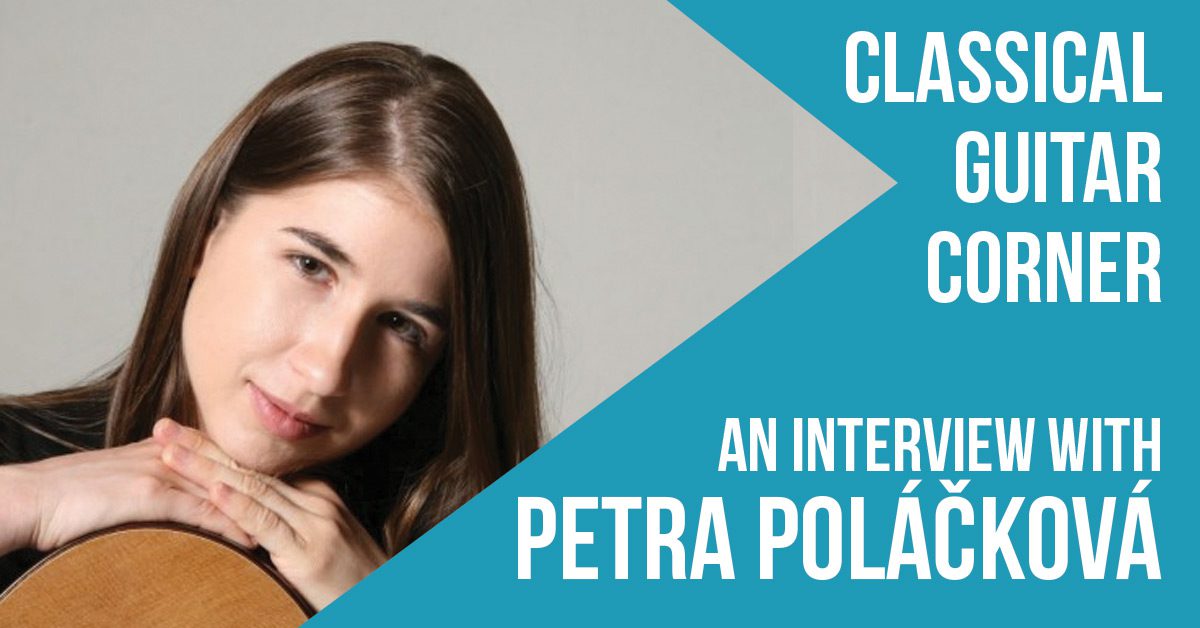
Petra Poláčková’s conversation with Simon Powis explores the experience of building a musical life in Europe. It includes her interest in a nine-string Romantic guitar, the value of live performance and decisions about where to invest artistic energy.
The interview follows an extended introductory conversation; Poláčková’s discussion begins later in the recording. The listening notes below focus on her musical perspective and the career questions she was considering at that time.
Podcast: Play in new window | Download
Subscribe: Apple Podcasts | RSS
Originally published in 2016. These listening notes draw on the recorded conversation. Roles, projects, releases and event announcements refer to the time of recording. Practical reflections are suggested applications, not additional quotations from the guest.
Explore the conversation
Use these approximate timestamps to jump to a topic in the recording.
- 18:02 — Silence can be part of the beginning of a performance
- 20:41 — An instrument can open a particular area of repertoire
- 25:06 — A live recording preserves a particular encounter
- 30:09 — A recording is also a document of a moment in development
- 34:30 — Choose where to put your energy with a clear purpose
Silence can be part of the beginning of a performance
“the music is born from silence”
— Petra Poláčková, 19:44
Poláčková describes taking time before playing to become quiet and enter the music. The pause also invites the audience to settle and focus on the sound that follows.
The amount of space depends on the character of the piece. A reflective work may ask for a different beginning from music with an immediate, energetic gesture.
For a student performance, consider the first sound before you make it. Hear the opening internally and give yourself time to begin with intention. The preparation is musical, rather than an empty delay to be filled.
An instrument can open a particular area of repertoire
The discussion of her Romantic guitar includes its additional bass strings and the repertoire that drew her towards that setup. Poláčková describes a continuing relationship with the instrument and its maker, rather than a purchase that settled every question at once.
Her interest includes music earlier than the nineteenth century, especially Baroque repertoire. The instrument provides possibilities that she enjoys exploring, while she continues to play other music as well.
For listeners, compare what the additional bass range and the instrument’s character contribute to a piece. The point is not that every player needs more strings, but that an instrument can influence the musical questions a performer chooses to pursue.
A live recording preserves a particular encounter
Poláčková recounts sharing concert videos because she was pleased with a performance, and later discovering that some had led to invitations. She recognises a role for chance in those connections.
The conversation distinguishes a live recording from a carefully produced presentation. A video cannot preserve the entire atmosphere of a hall, but it can retain something of an actual performance, including its human imperfections.
For a learner, recording a complete piece can be useful for a similar reason. It captures what happened at one moment and provides something concrete to hear and reflect on. It does not need to become a final judgement on your playing.
A recording is also a document of a moment in development
At the time of the interview, Poláčková was considering the practical and financial work of making a recording. Audience members wanted something to take home and hear again.
She also describes the difficulty of feeling satisfied with a recorded interpretation when musical ideas continue to change. A recording preserves one instrument, one occasion and one stage of understanding.
That perspective can make self-recording less intimidating. Keep a dated version of a piece and revisit it later. Changes in what you notice are themselves evidence of developing musical judgement.
Choose where to put your energy with a clear purpose
“I really love the guitar”
— Petra Poláčková, 34:44
Poláčková discusses moving her attention away from repeated competition entries towards projects that might provide a more lasting record of her work. She recognises that recordings and videos do not guarantee future invitations.
The wider career conversation includes personal connections, repeat appearances and maintaining a relationship with an audience. It offers an individual account rather than a universal formula for professional success.
For an amateur musician, the same question can be asked on a smaller scale: what do you want this project to do? Preparing a piece for friends, recording a collection or joining an ensemble can each be worthwhile when the purpose is clear.
Ideas to take into your own music
These prompts are reflections on the conversation, rather than a routine prescribed by the guest.
- Prepare the first sound: imagine the opening before beginning to play.
- Listen to instrumental character: notice how bass range and resonance affect a piece.
- Keep dated recordings: use them to hear change over time.
- Give a project a purpose: decide what makes it worthwhile beyond outside recognition.
Original episode notes and resources
The original introduction and resources are retained below. Any time-sensitive announcements belong to the episode’s publication period.
It was an absolute pleasure to sit down and chat with Petra Poláčková about her life and career in Europe. Petra is a world class performer on the classical guitar but is getting well known for her engaging use of the 19th century 9 string guitar. I hope you enjoy this conversation with Petra and feel free to visit her website to find out more.
Petra’s Website
Guitoberfest
Also, I mentioned Guitoberfest on the podcast, if you would like to find out more information about participating you can visit Guitoberfest here
Great interview with Petra! I’ve seen her videos before on Yotube, so it was a real treat to be able to hear thoughts on having a career as a classical guitarist. And it was was great to hear hear Evita on the podcast again! She has such a cute and effervescent personality. You are a very lucky man, Simon, and I would like to wish you many, nany happy years together as a married couple. I would love to give you advice, but I’m still trying to figure out how this marriage thing works. ?
Great interview Simon! Wishing you and Evita the best years ahead of you! I have been married to Karma (yes, that is her real name) for 22 years with one son, Kaden. My biggest advice…communicate everyday, live your married life each day like it would be the last day, when things go wrong, talk it out right away and do NOT let the passion of romance die, stay in love ! It’s that easy!!! Best of luck!!! :)