
In this lesson
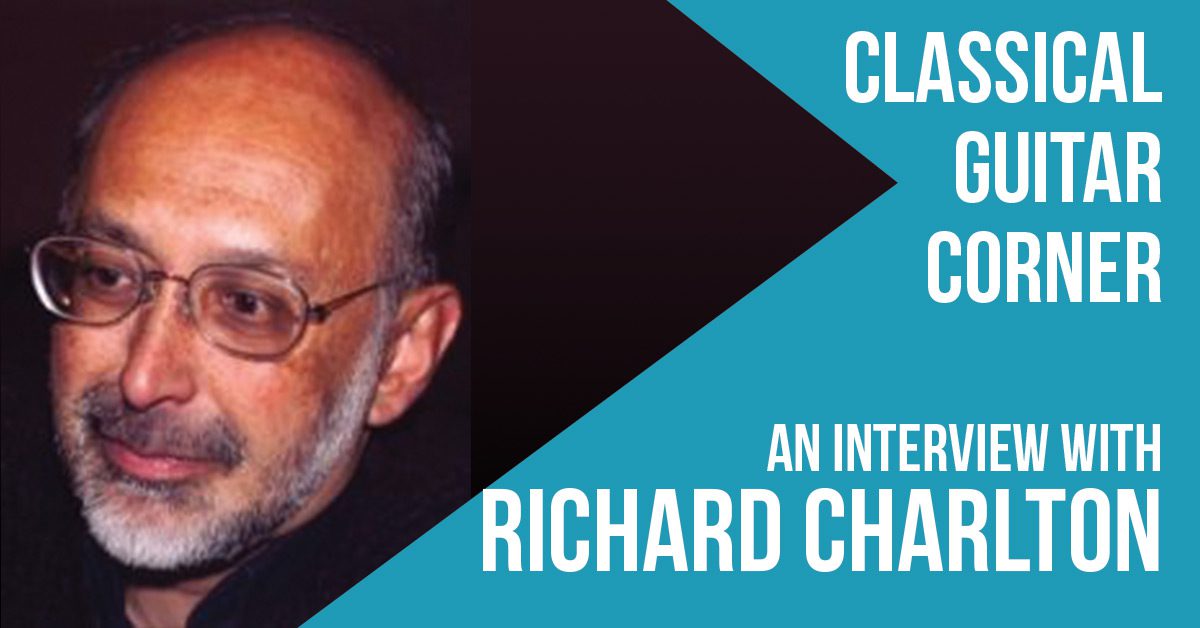
Richard Charlton talks with Simon Powis about the pleasure of making music and the practical situations that lead to a new piece. His account connects personal imagination with writing for particular performers and students.
The conversation includes musical examples and the stories behind them. It also offers an approachable view of composition: the first step can be a small idea made with the notes and techniques you already know.
Podcast: Play in new window | Download
Subscribe: Apple Podcasts | RSS
Originally published in 2017. These listening notes draw on the recorded conversation. Roles, projects, releases and event announcements refer to the time of recording. Practical reflections are suggested applications, not additional quotations from the guest.
Explore the conversation
Use these approximate timestamps to jump to a topic in the recording.
- 3:04 — You can begin composing before you have a complete method
- 17:32 — An image can suggest a musical gesture
- 19:23 — A composer can reuse an idea and give it another life
- 20:17 — Melody and harmony remain sources of discovery
- 29:15 — Writing for students begins with knowing what engages them
You can begin composing before you have a complete method
“I don’t think you need permission to do it”
— Richard Charlton, 4:58
Charlton recalls having a guitar and a limited amount of music, then making up small pieces in the style of the studies he was learning. He found that he enjoyed working out the pieces themselves, not only performing them.
Formal study came later. The early impulse was curiosity and pleasure, rather than permission from a teacher or a decision to adopt a professional identity as a composer.
For a learner, that offers a manageable starting point: take a few notes you know and arrange them into a short phrase. Listen, change something and try again. The result does not need to compete with the repertoire you admire.
An image can suggest a musical gesture
A Short Walk in a Rainforest evokes the experience of entering an Australian rainforest: quiet, sudden sounds, the atmosphere of the place and light through the trees. Charlton explains that the opening bird-like gesture is suggestive rather than an imitation of one particular bird.
The distinction matters for interpretation. The title provides a world of associations, while the performer still has to shape the actual rhythm, colour and line of the score.
When a piece has an evocative title, identify one sound or gesture that connects with it. A clear contrast in articulation or colour can make that idea audible without adding effects that are absent from the music.
A composer can reuse an idea and give it another life
Charlton describes bringing a melody from one of his song cycles into the middle section of the rainforest piece. He needed contrasting material and recognised that an earlier idea could be transformed to serve the new work.
The two pieces retain a relationship without being identical. The story shows composition as a process of listening, choosing and adapting, alongside the arrival of new material.
If you make up music, keep a record of small ideas even when they do not become complete pieces. Returning to a phrase in another context can reveal a use that was not apparent when you first wrote it.
Melody and harmony remain sources of discovery
“I like writing tunes.”
— Richard Charlton, 20:49
Charlton speaks directly about enjoying melody and believing that harmony still offers possibilities to explore. His examples of admired composers help explain the musical qualities that attract him.
The conversation does not require a listener to classify the music before enjoying it. A memorable line, a harmonic change or a distinctive rhythmic character can provide an immediate point of entry.
Try singing the melody of a short passage before adding its accompaniment. Then listen to how the harmony supports or changes the feeling of that line. The same exercise can help both interpretation and a first attempt at composing.
Writing for students begins with knowing what engages them
Charlton describes writing ensemble music because he needed material for the students he was teaching. Hearing those players respond taught him what worked and what interested them.
Familiar popular rhythms became one way to connect students with new music. An educational piece could develop ensemble and instrumental skills while drawing on sounds the students already recognised.
For an ensemble leader, that suggests evaluating a piece through both its learning demands and its appeal. A part needs to be manageable, but the group also needs a musical reason to want to play it.
Ideas to take into your own music
These prompts are reflections on the conversation, rather than a routine prescribed by the guest.
- Make a short phrase: use a few familiar notes and listen before judging it.
- Connect imagery with sound: choose one concrete colour or articulation to explore.
- Keep small ideas: save fragments for later rather than requiring a complete piece.
- Choose engaging ensemble music: connect an educational purpose with something players enjoy.
Original episode notes and resources
The original introduction and resources are retained below. Any time-sensitive announcements belong to the episode’s publication period.
Richard Charlton is one of Australia’s leading guitarists/composers. (Though he was originally born in the UK, he has been an Aussie since about the age of seven.) In this podcast Simon discusses many of Richard’s works for guitar, guitar ensemble, and more—several of which are featured listening here—but also what it’s like to compose for the guitar, and they even have a bit of a discussion about the Sacred Kingfisher bird! Please enjoy this wonderful conversation with Richard.
Featured works by Richard Charlton in this podcast:
- A Short Walk in the Rainforest (solo)
- Kingfisher (solo; from Kingfisher Dances)
- Déjà Vu (ensemble; from Three Distractions)
- Sky for Dreaming (ensemble; from Capricorn Skies)
- Reverie (solo)
Please check out more about Richard at his website: http://www.richardcharlton.com.au/
and at Australian Music Centre: http://www.australianmusiccentre.com.au/artist/charlton-richard
Another excellent podcast interview. Thank you Simon and Richard.
Wonderful and interesting podcast! Might an ensemble – large or small – be treated to learning music by Richard Charlton at the CGC Summer School…?
Great idea, Linda! I’ll pass the suggestion along to Simon.
Peace,
Dave B (CGC team)
Thank you, Dave : )
Linda has a great idea. I like the idea of exploring contemporary works. Thank you for this podcast. The music is enchanting, full of evocative ideas and color. Mr. Charlton has a wonderful way of connecting the worlds of nature and human emotion. —Drew
Hello Linda,
It will be our very great pleasure to bring some Richard Charlton ensemble music to the CGC Summer School- can’t wait to share it with you. Raffaele and I as so excited to be coming over and meeting you all in June!
Regards,
Janet Agostino
Hello Janet!
How nice to hear from you so far away. I’m sure you and Raffaele have a great deal of experience teaching Richard Charlton’s music in an ensemble setting like the upcoming Summer School. It will be a wonderful experience working with you. I am looking forward to June!
Best regards,
Linda
Hello Janet,
This sounds terrific—I look forward to meeting you and Raffaele in June!
Cordially,
Drew
Thanks Simon. Another great podcast! I am a Richard Charlton fan and I reckon ‘A Sky For Dreaming’ has to be one of my favourite pieces. Also I am one of those AMEB students who played ‘Reverie’ in the 3rd grade exam. I still love to play it every so often.
Cheers,
James.