
In this lesson
Nathan Mills joins Simon Powis to discuss Beyond the Guitar and his arrangements of music from films, games and television. The project connects classical-guitar skills with music that already carries strong memories and associations for its listeners.
The conversation explores both the musical work of arranging and the practical work of producing videos. It offers a useful view of how a personal interest can shape a recognisable creative direction.
Podcast: Play in new window | Download
Subscribe: Apple Podcasts | RSS
Originally published in 2017. These listening notes draw on the recorded conversation. Roles, projects, releases and event announcements refer to the time of recording. Practical reflections are suggested applications, not additional quotations from the guest.
Explore the conversation
Use these approximate timestamps to jump to a topic in the recording.
- 16:34 — A creative direction can connect interests you already have
- 23:20 — Familiar themes create an immediate connection with listeners
- 28:02 — An arrangement needs to preserve what makes the theme recognisable
- 32:12 — Variation can give a short idea a larger shape
- 29:29 — A regular creative project requires a workable process
A creative direction can connect interests you already have
Mills describes bringing together his love of the guitar with his enthusiasm for games, films and their soundtracks. The project’s name reflects the wish to look beyond the instrument’s standard repertoire.
He chooses much of the music because it matters to him, while recognising that even this apparently focused area contains an enormous range of material.
For a guitarist considering a personal project, begin with music you are curious enough to revisit repeatedly. Sustained work on an arrangement, recording or performance is easier to understand when the musical reason for doing it remains clear.
Familiar themes create an immediate connection with listeners
“It’s a really like-minded community of people who love the same things that I do.”
— Nathan Mills, 24:11
Mills describes listeners responding not only to a melody but to the memories associated with it. A game played with a sibling or a film seen years earlier can give a short theme unusual emotional force.
He also values the like-minded community that has gathered around the music he enjoys. Choosing material solely for hypothetical exposure would create a different relationship with the audience.
The lesson for a performer is to consider what an audience may already bring to the music. A brief introduction or a familiar melodic gesture can offer an entry point before more detailed listening begins.
An arrangement needs to preserve what makes the theme recognisable
“listening to what makes the theme the theme”
— Nathan Mills, 28:42
Mills describes experimenting with keys, positions, fingerings and harmonies to bring music for several instruments onto one guitar. The process necessarily involves choosing priorities.
He listens for the element the ear recognises: a melodic gesture, a rhythm or a chord progression. Once that element is secure, other details can be included where the instrument allows.
A useful arranging exercise is to identify the essential line before adding accompaniment. If the full texture becomes awkward, return to that priority and ask which supporting details make the greatest musical difference.
Variation can give a short idea a larger shape
Some source material needs shortening, while a brief motif may need development to become a satisfying guitar performance. Mills describes using changes of register, harmonics and other techniques to create variation.
The musical task is to offer contrast while preserving a recognisable connection. Adding more notes is only one possibility; another colour or texture can change the listener’s experience substantially.
Try repeating a simple phrase in a different register or with a different accompaniment. Listen for whether the change reveals something about the melody or merely makes it busier.
A regular creative project requires a workable process
Mills describes gradually moving towards a more frequent video schedule as his process became more organised. The arranging still required substantial work, and different pieces presented different levels of difficulty.
The conversation also acknowledges the vulnerability of sharing work online. A finished video brings together a performance, a visual presentation and a willingness to let other people respond.
For a small personal project, choose a scope you can complete: one short arrangement or one carefully prepared recording. Finishing it gives you practical information about your process that planning alone cannot supply.
Ideas to take into your own music
These prompts are reflections on the conversation, rather than a routine prescribed by the guest.
- Choose a meaningful theme: begin with music you want to spend time with.
- Identify the essential element: preserve what makes the tune recognisable.
- Use contrast purposefully: vary colour, register or texture before adding complexity.
- Finish a manageable project: learn from the complete process of preparing and sharing it.
Original episode notes and resources
The original introduction and resources are retained below. Any time-sensitive announcements belong to the episode’s publication period.
Nathan Mills is the creator of Beyond the Guitar. He has come up with some creative ways to translate video game, movie, and television music, onto the classical guitar and in the process he is welcoming a completely new audience to the instrument.
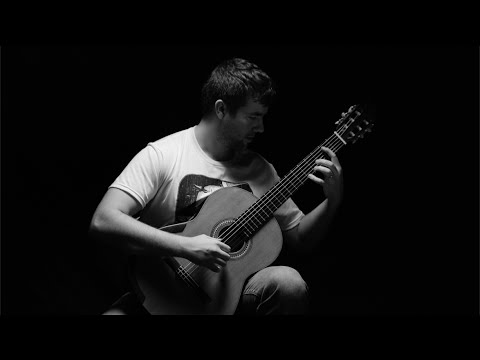


Here is Nathan’s You Tube Channel
https://www.youtube.com/c/BeyondTheGuitar
and here is his Patreon Page
https://www.patreon.com/beyondtheguitar
I’m really excited to listen. I’ve been following Nathan’s youtube channel for awhile and he’s awesome.
Yay!!! I am so excited to listen to this pod cast! Nathan is amazing!!!
I’d not heard of him before now, but after listening to his performances on the tube – I’m looking forward to hearing some of his insights on classical guitar and the musical arrangement process.
Most Excellent!
One of my favorite podcasts, being able to listen to Game of Thrones on a Classical guitar is priceless. Went to his You Tube channel and see other videos was amazing. My dream right now is to learn and be able to play some of them. I have become a fan of his work.