
In this lesson
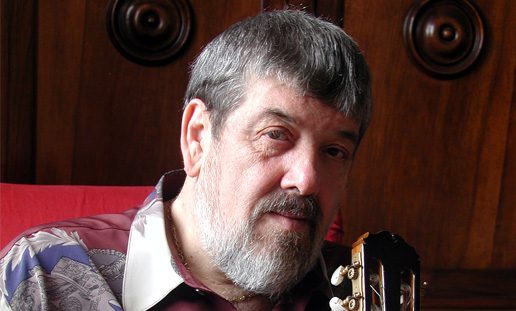
Oscar Ghiglia’s first CGC podcast conversation traces his beginnings in an artistic family and the experiences that shaped his life with the guitar. His recollections of Siena, Alirio Díaz and Andrés Segovia lead into questions of tone, expression and musical understanding.
This is a historical interview and a personal account. Its value lies both in the memories and in hearing a teacher think aloud about how a performance can communicate. The second part continues into practice and includes Ghiglia’s own essay on modes.
Podcast: Play in new window | Download
Subscribe: Apple Podcasts | RSS
Originally published in 2015. These listening notes draw on the recorded conversation. Roles, projects, releases and event announcements refer to the time of recording. Practical reflections are suggested applications, not additional quotations from the guest.
Explore the conversation
Use these approximate timestamps to jump to a topic in the recording.
- 7:18 — Painting and music shared a place in his early imagination
- 17:19 — Siena provided a community as well as instruction
- 20:31 — A beautiful sound still needs contrast and purpose
- 28:16 — Interpretation gives the listener a sense of direction
- 32:30 — Keep learning from performances, history and the score
Painting and music shared a place in his early imagination
Ghiglia describes growing up around painting and piano playing. His father used the guitar while looking at his own pictures, and later placed a guitar in his son’s hands while painting his portrait.
The recollections connect artistic work with attention and imagination. Drawing, writing and playing each offered a way to shape an idea and respond to what was emerging. The guitar also became a means of making friends and communicating with others.
For a learner, the story offers a broad view of musical beginnings. Interest can grow through the sound of an instrument, a family setting or an experience in another art. Those early attractions can remain useful sources of motivation as study becomes more demanding.
Siena provided a community as well as instruction
“It was the best time of my learning, I would say.”
— Oscar Ghiglia, 19:54
Ghiglia recalls hearing about the courses in Siena and travelling there as a conservatory student. The setting brought together musicians from different countries for an extended period, with conversation and languages becoming part of the experience.
He describes learning through exposure to playing, demonstration and the effort to reach a higher standard among peers. In his recollection, detailed technical explanations were not always readily supplied; curiosity and persistence played a large role.
The broader lesson is that an educational environment includes more than the scheduled lesson. Listening to another student, discussing a performance and returning to a question over time can all deepen what formal teaching begins.
A beautiful sound still needs contrast and purpose
Ghiglia remembers trying to reproduce the richness he admired in Alirio Díaz’s chords, then encountering Segovia’s very different response to his sound. The account captures how strongly an ideal of tone can shape a young player’s work.
The conversation moves from tone production to its musical purpose. Simon recalls a lesson in which Ghiglia questioned a performance where everything sounded uniformly beautiful. Without contrast, a phrase can lose its direction and character.
A useful experiment is to play the same short phrase with two different colours, then decide why one note or harmony might need to differ from another. The question is not simply whether each sound is attractive, but whether the sequence says something.
Interpretation gives the listener a sense of direction
“Music has to be always performed in a way that it speaks.”
— Oscar Ghiglia, 28:16
Ghiglia argues that music needs to speak and move towards an aim. He discusses the organisation of a sonata and the importance of understanding how sections relate, rather than treating each passage as a separate display.
His examples are part of his interpretive outlook. They invite close attention to the score, while recognising that the page does not explicitly describe every nuance of timing or expression.
For a student piece, begin with a modest version of the same task. Find an opening, a point of contrast and a closing gesture. Hear how one leads to the next. A clear sense of direction can make simple music more convincing without adding exaggerated effects.
Keep learning from performances, history and the score
The final part of the interview asks what musical education should encourage. Ghiglia urges students to be aware of performances and musicians beyond their immediate lessons, including the work of earlier generations.
His discussion of Bach treats the score as a record of a composer’s choices. The listener hears a strongly held personal philosophy of interpretation, rather than a neutral survey of every historical-performance approach.
The practical invitation is to listen and investigate with care. Compare what you hear with what is written, ask why a performer chose a particular shape, and return to the score with a better question. That curiosity leads naturally into the second interview’s discussion of singing and preparation.
Ideas to take into your own music
These prompts are reflections on the conversation, rather than a routine prescribed by the guest.
- Recall what drew you to the guitar: use that sound or experience as a source of motivation.
- Listen beyond your own practice: hear another player with one specific musical question.
- Give colour a purpose: connect a tonal contrast with a change in the phrase.
- Map a short piece: identify how its beginning, contrast and ending relate.
Original episode notes and resources
The original introduction and resources are retained below. Any time-sensitive announcements belong to the episode’s publication period.
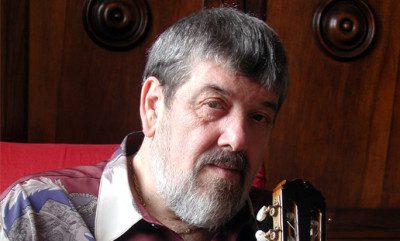
Eight years ago I was lucky enough to study with the guitar legend Oscar Ghiglia. Last week I trekked up to Boston and sat down with the maestro to record this interview. He is an incredible musician and person and I hope you enjoy this interview!
Simon
Hope you all enjoy this one, I am pretty excited about the guests coming up in the podcast.
That was a very interesting interview. Thanks for taking the time to record it. Please do more.
I enjoyed it. What an interesting home life as a child growing up with multiple discipline artists.
Great podcast! I played in a master class that Maestro Ghiglia gave at Hartt College of Music in 1972. I love listening to him and I remember the lessons he gave me on Dowland Fantasie 7 and Lauro’s Suite Venezolana. I also heard him solfege the 2 octave chromatic scale in Capricho Arabe at concert tempo as a student played it and then polished his knuckles on his chest – a wonderfully amazing and humerous moment. Looking forward to the next installment!
I just finished listening to the Oscar Ghiglia interview – enjoyed listening to his comments and reflections.
Thank you for your efforts in maintaining this site – you’re doing good work. (helps me to keep in focus).
Wonderful and inspiring ….