
In this lesson
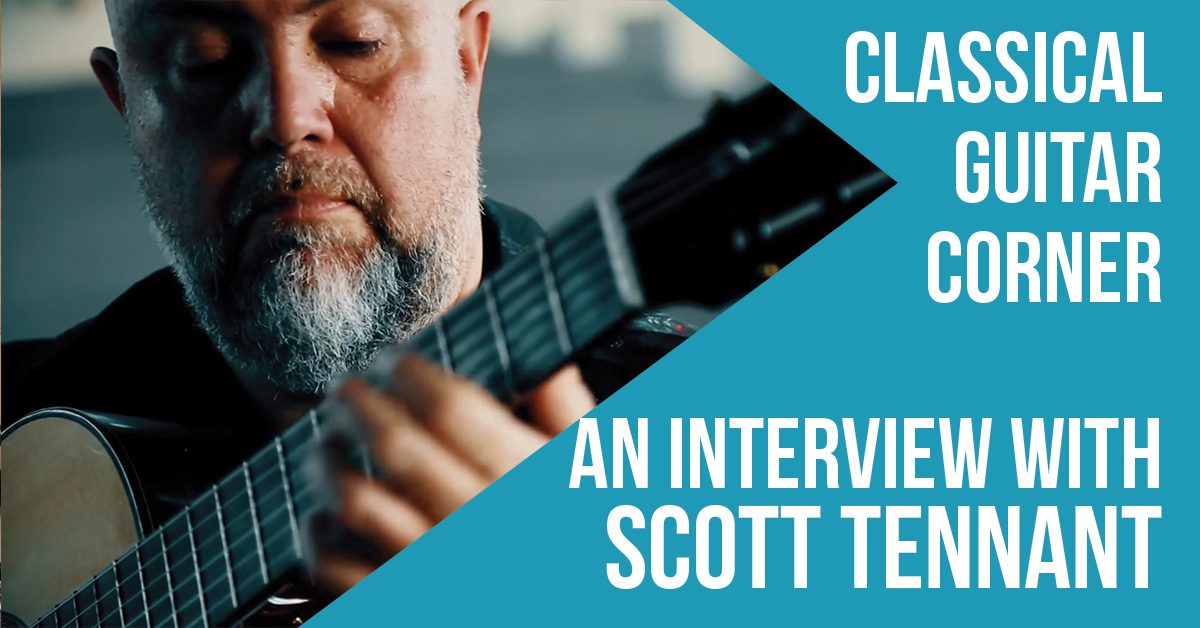
Scott Tennant joins Simon Powis at Ben Verdery’s Maui masterclass for a conversation about the everyday work behind a musical life. The interview moves from the origins of Pumping Nylon to the Los Angeles Guitar Quartet, reading scores for pleasure and learning to share music with other people.
For students, one particularly useful thread is the relationship between preparation and enjoyment. Tennant takes the work seriously, but repeatedly returns to curiosity: the pleasure of a sound, the possibilities in an unfamiliar score and the wish to communicate something you love.
Podcast: Play in new window | Download
Subscribe: Apple Podcasts | RSS
Originally published in 2018. These listening notes draw on the recorded conversation. Roles, projects, releases and event announcements refer to the time of recording. Practical reflections are suggested applications, not additional quotations from the guest.
Explore the conversation
Use these approximate timestamps to jump to a topic in the recording.
- 3:41 — Pumping Nylon began with practical teaching needs
- 11:07 — Share a piece you love, even before you have a concert programme
- 14:16 — Good teaching notices a specific improvement
- 16:18 — Prepare your part so rehearsal can become musical work
- 20:26 — Read the music before your fingers decide how it goes
- 24:00 — Curiosity about sound leads beyond a fixed routine
- 28:24 — A commission can grow out of a musical conversation
- 32:29 — Composition can begin with something you need to express
Pumping Nylon began with practical teaching needs
Tennant describes collecting handwritten material for his students before the idea became a widely used book. A warm-up routine was central to that early collection. The intention was to offer useful, concise work for the hands, rather than produce a forbidding academic volume.
The title grew out of his interest in weightlifting, while cartoons and humour helped establish an approachable tone. Those details matter because they reveal the teaching problem behind the publication: how to make necessary technical work something a student can understand and actually use.
A useful way to approach any exercise collection is to ask what each activity is helping you hear or coordinate. Completing a page is less informative than noticing whether a movement has become easier or a line more even. The book’s practical beginnings encourage that kind of purposeful use.
Share a piece you love, even before you have a concert programme
“Play something you really love for other people.”
— Scott Tennant, 12:31
Tennant encourages students, including beginners, to find opportunities to play for others. The offering can be modest: a piece, or part of one, shared with family or recorded on video. Repeated opportunities can make performing more familiar and reveal things that solitary practice misses.
He also describes how a run of concerts can help a performer become more comfortable and explore the music more deeply. This is not a promise that nerves disappear after a fixed number of attempts. It is an invitation to treat sharing music as a skill that develops through experience.
For an adult learner, an achievable starting point might be one short piece for one sympathetic listener. Choose music that means something to you, prepare it to the best of your current ability and notice what the experience teaches you. The purpose is communication as well as accuracy.
Good teaching notices a specific improvement
The discussion distinguishes between different teaching situations. An advanced ensemble needs members who prepare their parts and respect the group’s time. A young learner may need a teacher to notice a small but real improvement and explain why it matters.
Tennant’s emphasis is on specific feedback. General encouragement has more educational value when it identifies something the student actually did: a clearer sound, a more secure rhythm or a detail they remembered to apply.
The same principle can improve self-assessment. After playing, name one audible success and one next task. That gives you something concrete to retain and something manageable to work on, without turning the whole performance into a verdict on your ability.
Prepare your part so rehearsal can become musical work
Tennant describes the quartet reading and selecting music, then doing individual preparation before the next rehearsal. A part does not need to be frozen in its final form—fingerings can still change—but players need enough command to keep up and work together.
Rehearsal time has limits. Knowing what needs attention helps the group use that time well, particularly when several busy musicians must coordinate their schedules. Preparation makes room for decisions about balance, timing and character.
For a student duet, this suggests a simple division of labour. Learn the basic notes and rhythms independently, mark uncertainties, then use shared time to listen across the parts. Agree on a small agenda so the rehearsal has a purpose beyond another complete run-through.
Read the music before your fingers decide how it goes
“I challenge myself to see if I can figure out what the piece is about.”
— Scott Tennant, 21:03
Tennant enjoys reading music away from the guitar, including on planes. He describes imagining the sound, singing or conducting internally and trying to understand the piece before physical movements take over.
This approach treats a score as music to investigate. Rhythm, texture and harmony offer clues about the character and direction of a work. His extensive reading also builds familiarity with the kinds of patterns that appear on the page.
A beginner can try a smaller version without needing to hear an entire score internally. Look at one phrase, identify its rhythm, notice whether the melody rises or falls, and find a likely point of arrival. Then play it and compare the result with your first impression. The exercise gives reading a musical purpose.
Curiosity about sound leads beyond a fixed routine
The conversation ranges through coffee, instruments and the direct physical experience of making a guitar sound. Tennant’s curiosity about subtle differences is part of the pleasure, rather than a problem to be solved once and forgotten.
He describes continuing to explore sound even after many years of playing. The classical guitar’s responsiveness to touch helps explain its attraction to musicians from other traditions: a small change in how the string is played can change the musical result.
For your own playing, keep that exploration small and audible. Try a phrase with two deliberately different colours and decide which better supports its character. Curiosity is most useful when you listen closely enough to compare the results.
A commission can grow out of a musical conversation
Tennant recounts the development of Pat Metheny’s Road to the Sun for the quartet. The story begins with musicians exchanging interests and discussing what the guitar can do, then follows the practical complications of commissioning, scheduling and preparing a substantial new work.
The project became larger than the initial idea. His account gives listeners a view of the relationships and organisation behind a premiere, alongside the excitement of discovering the music itself.
This is also a reminder that new repertoire does not appear only through solitary inspiration. Conversation, curiosity about another musician’s language and the commitment to prepare the result all contribute to bringing a work into the world.
Composition can begin with something you need to express
“I didn’t do it because I thought I should compose something. I just had to do it.”
— Scott Tennant, 33:33
Towards the end, Tennant describes a personal musical idea that developed into a larger recorded piece. He does not present composing as an obligation attached to being a guitarist. In this instance, the impulse came from something he wanted to express.
That story offers a welcoming starting point for a learner. A small tune or phrase can be worth preserving even if you have no ambition to become a professional composer. Record it, return to it and see whether it suggests a continuation.
The interview brings technical work, performance and invention into the same picture. Each can serve the simple wish to hear more, understand more and share something meaningful through the instrument.
Ideas to take into your own music
These prompts are reflections on the conversation, rather than a routine prescribed by the guest.
- Make a small performance possible: share one prepared piece with a supportive listener.
- Name the improvement: replace a vague judgment with one specific thing you heard.
- Prepare for ensemble work: learn your part and bring questions to the rehearsal.
- Read before playing: study the rhythm and shape of a phrase away from the instrument.
- Capture an idea: record a melody you invent, however short, and listen back later.
Original episode notes and resources
The original introduction and resources are retained below. Any time-sensitive announcements belong to the episode’s publication period.
Scott Tennant is one of the most accomplished guitarists of his generation. He is one of the founding members of the Grammy-award-winning Los Angeles Guitar Quartet. In addition he has recorded numerous solo albums in his decorated career. He is also the author of one of the most important classical guitar pedagogy texts of the last several decades, Pumping Nylon. Scott is on the Faculty at both USC Thornton School of Music and Pasadena Conservatory of Music.
In this conversation, Simon and Scott talk about a host of topics, including Scott’s book, his performing career, and the LAGQ. You won’t want to miss this episode!
What a great interview! Thank you Simon. Loved the personal story and composition at the end – beautiful!
Thank you, Simon. I really enjoyed this interview and, like Mark above, was quite taken with his personal story and approach.
I have just had the pleasure of listening to this podcast. I have and use Pumping Nylon, and it is great to hear a little of the back story of why it was prepared, and some of Scott’s background. The piece at the end was so very cool.