
In this lesson
Irina Kulikova joins Simon Powis for a conversation about the work behind a polished performance. She describes building a musical idea, choosing useful fingerings and organising practice in shorter, focused blocks.
The interview is also candid about nerves and the demands of a performing life. Her account of family support, changing self-talk and finding community offers a human perspective on the confidence listeners hear on stage.
Podcast: Play in new window | Download
Subscribe: Apple Podcasts | RSS
Originally published in 2020. These listening notes draw on the recorded conversation. Roles, projects, releases and event announcements refer to the time of recording. Practical reflections are suggested applications, not additional quotations from the guest.
Explore the conversation
Use these approximate timestamps to jump to a topic in the recording.
- 9:27 — Begin with the musical line you want to hear
- 14:45 — Use shorter blocks to keep practice attentive
- 19:03 — A slow passage can require the deepest work
- 20:37 — Family support included poetry, singing and enjoyment
- 27:33 — Meet performance thoughts with a more supportive response
- 33:14 — The audience can be a reason to play, rather than a verdict
Begin with the musical line you want to hear
“I want the music line, the phrase, be beautiful.”
— Irina Kulikova, 11:17
Kulikova describes taking inspiration from orchestral, operatic and piano music. Her experience of conducting helps her imagine a piece as something to shape, rather than merely a sequence of guitar movements.
Her mother’s cello playing and her own piano studies broadened that musical foundation. Later work with Marco Tamayo helped her connect those ideas with more specific guitar techniques and fingerings.
The relationship is practical: a fingering should make the music easier to realise. Before settling on a solution, listen to whether it preserves the line, allows the intended articulation and avoids distracting noise. Convenience and musical richness need not always be opposing goals.
Use shorter blocks to keep practice attentive
“But I would never stay with one piece for four hours.”
— Irina Kulikova, 18:05
Kulikova contrasts her later practice habits with spending hours on a single piece until concentration and enjoyment faded. Parenthood and an interest in her daughter’s educational experience prompted her to rethink how she divided the work.
She describes moving between focused blocks and returning to them, rather than repeatedly playing everything. She often begins work from the end of a piece and identifies passages that need particular attention. The aim is to distribute concentration more usefully.
This is her account of what works for her, not a universal timetable. A student can test the principle with two manageable tasks: work carefully on one, switch to another, then return and assess what has stayed clear. Let the quality of attention help determine the length of the block.
A slow passage can require the deepest work
A difficult passage is not necessarily the fastest one. Kulikova explains that connecting notes beautifully in slow music can demand detailed attention to sound, timing and the space between notes.
Fast patterns may benefit from repetition once the movement is understood, but a slow melody asks a different set of questions. Does the line continue? Is a change of note expressive or merely mechanical? Is the next sound prepared in a way that supports the phrase?
Choose a few slow notes and record them. Listen to the transitions as carefully as the individual tones. This can reveal a useful practice task in music that looks technically simple on the page.
Family support included poetry, singing and enjoyment
Kulikova recalls her mother attending lessons and practising with her. Their shared work included singing melodies, playing them on the piano and pairing poetry with pieces. Musical study was also time spent together.
The story combines serious preparation with affection and play. It helps explain why her musical references extend beyond the guitar and why a phrase can carry a meaning beyond its technical demands.
For a learner at any age, that offers permission to use imagination alongside analysis. Read a poem, sing a melody or discuss the character of a piece with someone else. These activities can give a practice session a wider musical context without replacing careful work on the instrument.
Meet performance thoughts with a more supportive response
“I do the opposite. I accept them.”
— Irina Kulikova, 31:07
Kulikova describes stage nerves changing from childhood through adolescence and professional life. She has experienced intrusive thoughts, memory concerns and the challenge of returning after a substantial break from performing.
Her later approach involves acknowledging a distracting thought and bringing attention back to the music. Rather than arguing with herself for having the thought, she tries to return to the melody and the people who have come to listen.
This is a personal account of coping with performance pressure, not a promise that a change of attitude resolves every difficulty. A useful musical experiment is to choose a clear focus before playing: the shape of the first phrase, the sound of the bass or the continuity of a melody. It gives attention somewhere constructive to return.
The audience can be a reason to play, rather than a verdict
Kulikova describes gradually seeing listeners and juries as people ready to hear music. The concert became a special occasion and an opportunity to share something, alongside the responsibility of preparing well.
The discussion does not erase the less glamorous side of a performing career. Travel, loneliness and changing schedules can be demanding. She speaks about finding a sense of family within the musical community and being reminded of the value of her work by listeners’ responses.
For amateur musicians, this reframes a familiar concern. A small performance does not have to prove your worth as a guitarist. It can be a prepared contribution to another person’s day. A supportive musical community gives that contribution a place to happen.
Ideas to take into your own music
These prompts are reflections on the conversation, rather than a routine prescribed by the guest.
- Hear the phrase first: make one musical decision before choosing the final fingering.
- Divide the work: try focused blocks and return to a passage after a change of task.
- Practise a slow connection: listen to what happens between two notes.
- Choose a performance focus: give your attention a specific musical detail to return to.
- Share within a community: play for someone who wants to hear your progress.
Original episode notes and resources
The original introduction and resources are retained below. Any time-sensitive announcements belong to the episode’s publication period.
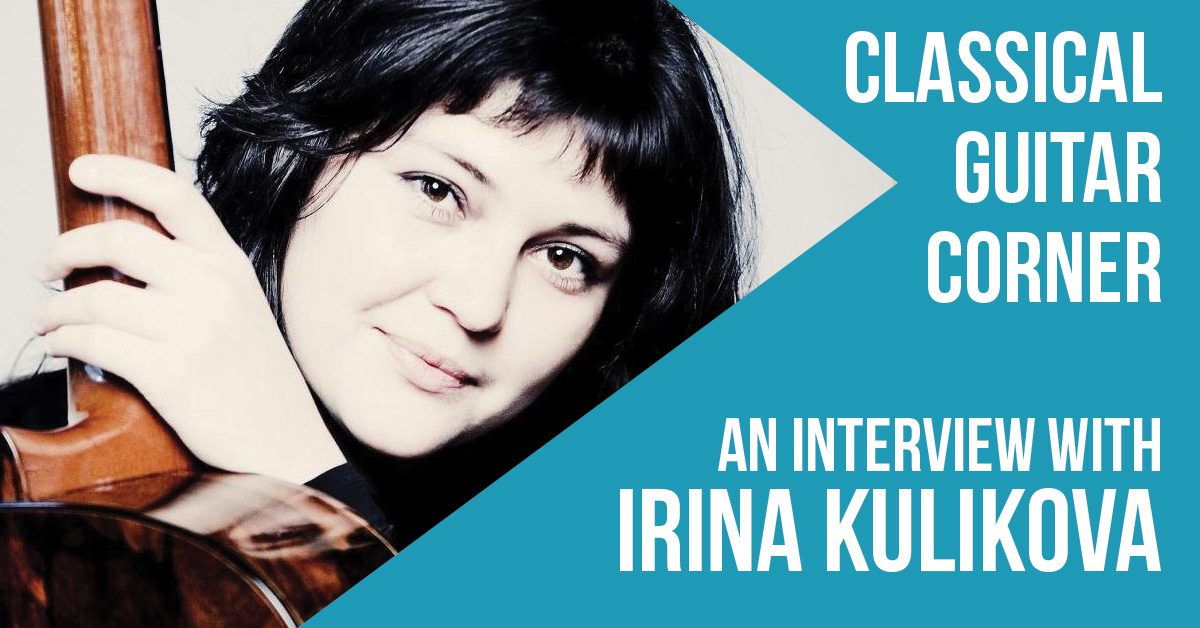
Irina joins the CGC Podcast to discuss her approach to learning music, performance anxiety, and her path as a musician.
You can find out more about Irina at irinakulikova.com
Also mentioned in this podcast: ukulelecorner.com
Congratulations on the launch of ukulelecorner.com ! Lovely interview with one of my favorite guitarists. Her journey with the guitar, management of practice, and life on the road was so inspiring.