
In this lesson
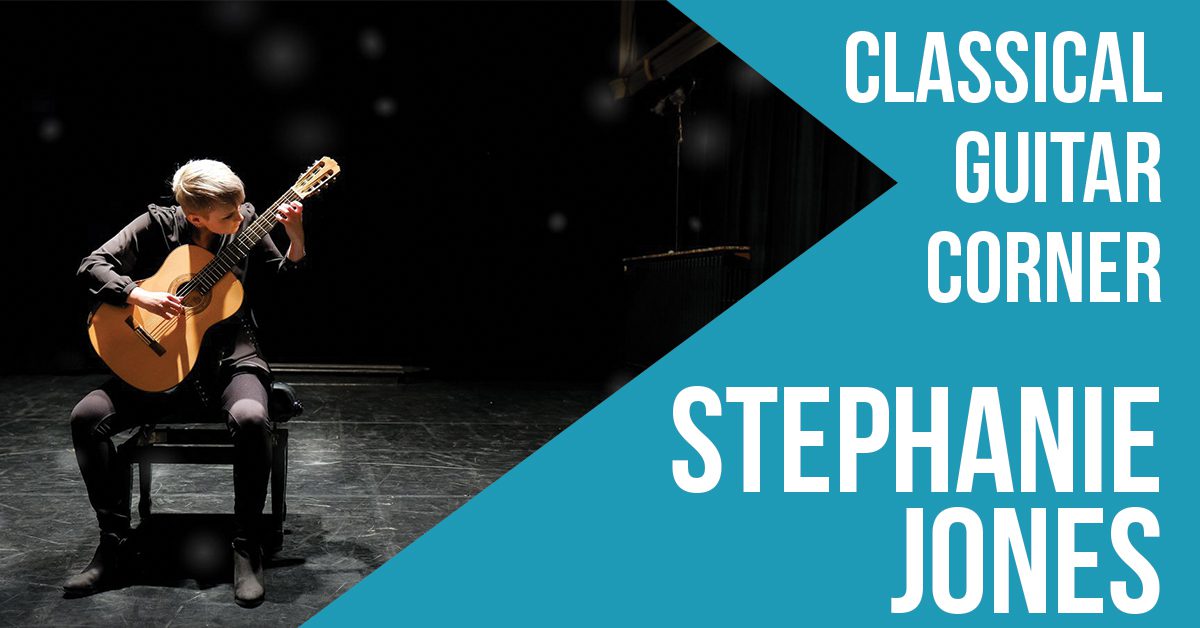
Stephanie Jones joins Simon Powis to discuss her album Open Sky, her education in Australia and Germany, and the performances that introduced her playing to listeners online. Originally recorded as a livestream, the interview includes musical excerpts as well as conversation.
A recurring theme is the value of a varied musical education. Classical guitar, saxophone, jazz and ensemble experience all contributed to her approach. The discussion also looks behind the camera at the care and collaboration involved in sharing a performance.
Podcast: Play in new window | Download
Subscribe: Apple Podcasts | RSS
Originally published in 2020. These listening notes draw on the recorded conversation. Roles, projects, releases and event announcements refer to the time of recording. Practical reflections are suggested applications, not additional quotations from the guest.
Explore the conversation
Use these approximate timestamps to jump to a topic in the recording.
- 4:54 — Choose an instrument by how it responds to you
- 7:28 — Teachers and colleagues helped turn speed into a clearer musical message
- 13:45 — A well-made video gives people a way to discover the music
- 18:05 — Online attention can become a real musical connection
- 23:03 — Open Sky brings musical energy and visual collaboration together
- 27:16 — Other instruments can enrich your guitar playing
- 30:40 — Let style guide the way you practise difficult repertoire
Choose an instrument by how it responds to you
Jones recalls trying a Paul Sheridan guitar while visiting Perth during her studies. The attraction was immediate: the instrument felt comfortable in her hands and offered a combination of resonance, projection and tonal variety.
Her description focuses on the playing experience rather than a specification sheet. Sound, response and physical fit worked together. That is particularly relevant to a guitarist who assumes there is one ideal instrument independent of the person playing it.
When comparing guitars, try a familiar phrase with contrasting colours and dynamics. Notice whether the instrument makes those changes easy to hear and comfortable to produce. Jones’s story is a personal choice, not a recommendation that every player seek the same maker or design.
Teachers and colleagues helped turn speed into a clearer musical message
Jones recalls lessons with Alan Banks that included other styles alongside classical repertoire. Later study with Tim Kain and Minh Le Hoang involved refining right-hand movement and paying close attention to phrasing and interpretation.
In Germany, study with Thomas Müller-Pering and work with the Weimar Guitar Quartet added new repertoire, confidence and ensemble experience. She describes colleagues as an important part of that development.
The thread through these experiences is that a musician develops through relationships as well as private practice. A teacher can identify a movement to refine; another player can make you hear a phrase differently. Progress includes learning to communicate a clearer idea, not only playing faster.
A well-made video gives people a way to discover the music
“You’ve got to have regular content and you’ve got to be happy with the quality as well.”
— Stephanie Jones, 15:36
Jones links the growth of her online audience with more polished videos, regular releases and collaboration. Work with Jakob Schmidt improved the recordings, while appearances on another established channel introduced listeners to a catalogue they could continue exploring.
She also recognises that the response to an individual video is not fully predictable. Quality and presentation matter, but they do not give a performer complete control over how widely something is seen.
One practical observation is especially clear: people click to hear the music. A long opening title can delay the experience they came for. For a guitarist sharing a performance, a direct beginning and clear sound can help make the invitation more welcoming.
Online attention can become a real musical connection
Jones describes listeners recognising her from videos, attending concerts and contacting her about collaborations. Her account values the relationships and opportunities that followed, rather than treating video income as the only measure of success.
When Simon asks about evidence, she is careful to say that she has not calculated the numbers. Her experience comes from conversations with audience members and the opportunities she saw developing. The interview does not establish a universal conversion rate from followers to ticket buyers.
For a musician building an audience, the useful distinction is between visibility and connection. A recording can introduce the playing, while a concert, conversation or further piece gives someone a reason to stay interested. A body of meaningful work is more useful than judging everything by one video’s performance.
Open Sky brings musical energy and visual collaboration together
Jones explains the connection between the album title and Quique Sinesi’s Cielo Abierto. She was drawn to the energy of the piece and the sense of possibility it suggested. The project also involved a new composition from Sergio Assad and artwork by Colombian artist La Dany.
The musical excerpts give listeners an opportunity to hear the qualities being discussed: rhythmic character, changes of colour and the physical energy of the playing. The original album link remains below.
The conversation belongs to the album’s release period, including the restrictions on travel and shipping discussed at the time. Those details provide context for the interview rather than current ordering instructions.
Other instruments can enrich your guitar playing
“Doing these other things is what’s helping make my guitar better.”
— Stephanie Jones, 30:03
Jones’s saxophone and jazz experience helped her think about melodic phrasing and musical style. Playing in bands added another setting in which rhythm and interaction mattered.
She challenges the idea that time spent on another instrument necessarily subtracts from guitar development. In her experience, those activities contributed to the musician she became.
You can apply that curiosity without taking up several instruments. Listen to a saxophonist shape a melody or a rhythm section sustain a groove. Then ask what your guitar phrase would need to convey a comparable sense of breath or rhythmic commitment.
Let style guide the way you practise difficult repertoire
The discussion of Piazzolla’s seasons recognises the technical demands of Sergio Assad’s arrangements, but Jones also emphasises accents, character and rhythmic feel. Getting through the texture is only part of the task.
Original recordings and experience of different genres helped inform her approach. The aim is not an abstract cleanliness that removes the music’s personality, but a convincing command of its style.
For a difficult passage, separate two questions: what movement needs work, and what character must survive that work? A slower tempo can still retain the intended accent and direction. Technical practice becomes more useful when the musical reason remains audible.
Ideas to take into your own music
These prompts are reflections on the conversation, rather than a routine prescribed by the guest.
- Listen across instruments: study how a wind player shapes and breathes through a melody.
- Keep character in slow practice: retain the intended accents while reducing the tempo.
- Share the music promptly: let a performance recording begin without an unnecessarily long introduction.
- Value the collaboration: seek feedback on sound and presentation from someone whose work you trust.
- Look beyond one response: build a small body of performances that shows what you care about.
Original episode notes and resources
The original introduction and resources are retained below. Any time-sensitive announcements belong to the episode’s publication period.
In the latest episode of The Classical Guitar Corner Podcast, Simon interviews world-renowned Australian guitarist Stephanie Jones. Come hear all about Stephanie’s new album, Open Sky (along with some samples), life as a guitarist, her social-media following, and more.
This was originally recorded during a YouTube livestream at the Classical Guitar Corner YouTube channel. Subscribe here so you never miss a stream.