
In this lesson
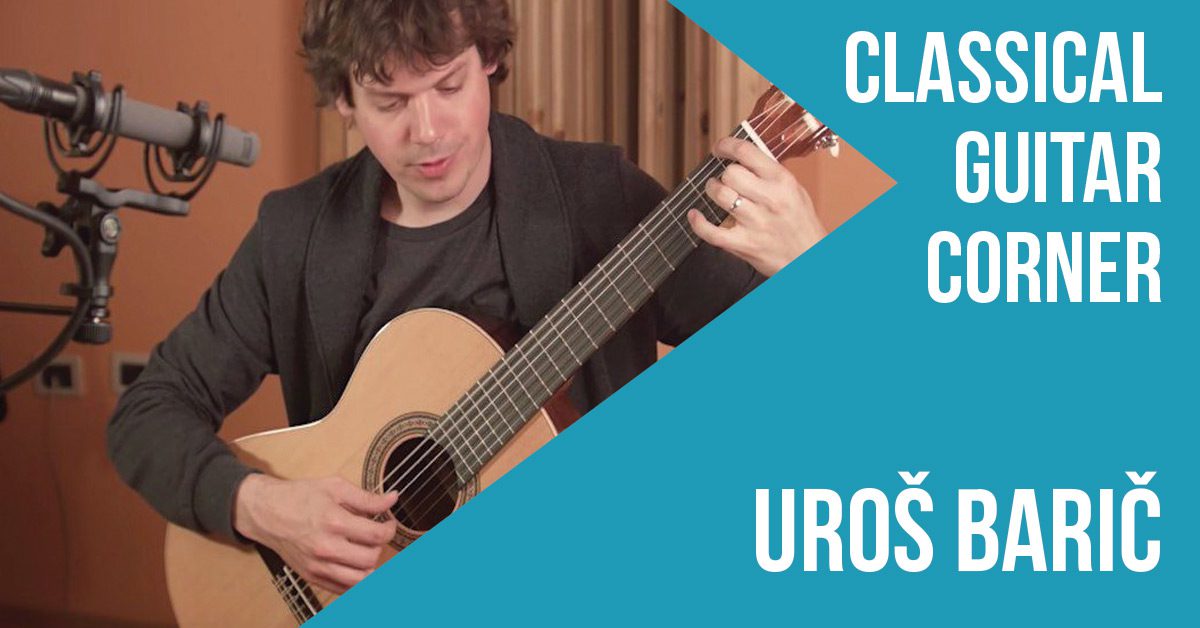
Uroš Barič’s conversation with Simon Powis connects the work of a guitarist with the work of a recording producer. Study, listening, recording experiments and collaboration all contribute to the sound a musician learns to recognise and create.
The interview also explores the Virtual Guitar Orchestra and the experience of bringing separately recorded performances into a shared musical project. The technical work serves a human purpose: allowing musicians to make something together.
Podcast: Play in new window | Download
Subscribe: Apple Podcasts | RSS
Originally published in 2020. These listening notes draw on the recorded conversation. Roles, projects, releases and event announcements refer to the time of recording. Practical reflections are suggested applications, not additional quotations from the guest.
Explore the conversation
Use these approximate timestamps to jump to a topic in the recording.
- 4:13 — Musical study extends beyond the guitar lesson
- 7:43 — What a performer feels and what an audience hears can differ
- 11:52 — Recording skills grew through practical experiments
- 21:31 — The ear matters more than the equipment list
- 29:31 — A recording project is a collaboration from beginning to end
- 35:44 — The Virtual Guitar Orchestra made participation meaningful
Musical study extends beyond the guitar lesson
Barič recalls studying in Slovenia, Trieste and Vienna, including work with Álvaro Pierri and study of the lute. Encountering different teachers required him to consider which ideas he could absorb and make meaningful in his own playing.
His years in Vienna also provided frequent opportunities to hear orchestral music. Those experiences broadened the musical world around his guitar study. A lesson could introduce an idea, while hearing another ensemble gave it a different scale and sound.
For a student, wider listening can be a practical part of learning. Choose a phrase in your current piece and listen for a comparable gesture in singing, strings or wind instruments. The aim is to expand what you can imagine, not simply to copy another instrument.
What a performer feels and what an audience hears can differ
The discussion of teaching includes musical line, voicing and the degree of contrast needed to communicate an idea. A change that feels substantial to the player may be much less apparent to someone listening from a distance.
That distinction is one reason recording can become an educational tool. It offers a chance to hear the result without simultaneously managing the movements that produced it.
Try recording one short phrase with a clear dynamic or tonal intention. Listen later without playing along. Can you hear the intended change? The answer gives you a more useful next step than judging whether the recording is simply good or bad.
Recording skills grew through practical experiments
Barič recalls the fascination and pressure of an early radio-recording experience, then describes learning through his own projects. Initial equipment was modest, and recording friends became part of the process.
The learning involved mistakes as well as successful results. Over time he developed both technical skills and a clearer aesthetic judgement about the sound he wanted.
That gap between an imagined result and an actual recording is familiar to instrumentalists. It can be useful information: identify one difference you can hear, change one thing and compare again. A series of small experiments is more informative than changing an entire setup at once.
The ear matters more than the equipment list
“It’s in how you use it and the tricks you learn on the way.”
— Uroš Barič, 23:50
Barič places considerable importance on microphone position, the room and the way equipment is used. Moving a microphone changes the relationship between the direct instrument sound and the surrounding space.
The conversation does not offer one universal distance or a purchase list that guarantees a professional result. It describes judgement developed by listening and comparing. An expensive microphone still has to be used in a way that suits the instrument and room.
For a simple home experiment, keep the performance and recording level as consistent as possible and compare two positions. Listen for clarity, bass balance and the room around the sound. Save both versions so memory does not have to do all the comparison.
A recording project is a collaboration from beginning to end
The discussion moves through the stages of a project: planning, recording, musical input, editing, mixing, mastering and the materials that accompany a release. The finished album is the result of decisions across that whole process.
Barič values a friendly working relationship and an understanding of what a musician wants to achieve. Those conversations affect the recording itself as well as the practical timetable.
For anyone planning a recording, write down its purpose before focusing on equipment. Is it a practice reference, a performance to share or a carefully produced release? Different purposes suggest different levels of preparation and different expectations.
The Virtual Guitar Orchestra made participation meaningful
“It was like a great classical guitar party.”
— Uroš Barič, 40:44
Barič describes bringing together professional guests, students and amateur guitarists in the Virtual Guitar Orchestra. Separate contributions had to be assembled with extensive editing and production work.
What stays with him is the participants’ response: the sense of belonging to a musical community during a period when meeting in person was difficult. The finished performance mattered, but so did the act of taking part.
The conversation closes with his interest in arranging and recording music from different sources. That curiosity connects the performer and producer roles. Both involve listening for a possibility and doing the patient work needed to make it audible.
Ideas to take into your own music
These prompts are reflections on the conversation, rather than a routine prescribed by the guest.
- Listen beyond guitar recordings: follow a phrase in another instrumental setting.
- Check an expressive intention: record it and listen without playing.
- Change one recording variable: compare positions before buying new equipment.
- Define the project: decide what a recording is for and who it should reach.
Original episode notes and resources
The original introduction and resources are retained below. Any time-sensitive announcements belong to the episode’s publication period.
Uroš is a wonderful musician, and outstanding recording engineer, and really just a lovely person! In this episode we talk about recording, his time in Vienna, work on the Virtual Guitar Orchestra, and his arrangements.
If you would rather watch the whole CGC show episode on video, you can watch here:
and really just a lovely person! In this episode we talk about recording, his time in Vienna, work on the Virtual Guitar Orchestra, and his arrangements.