
In this lesson
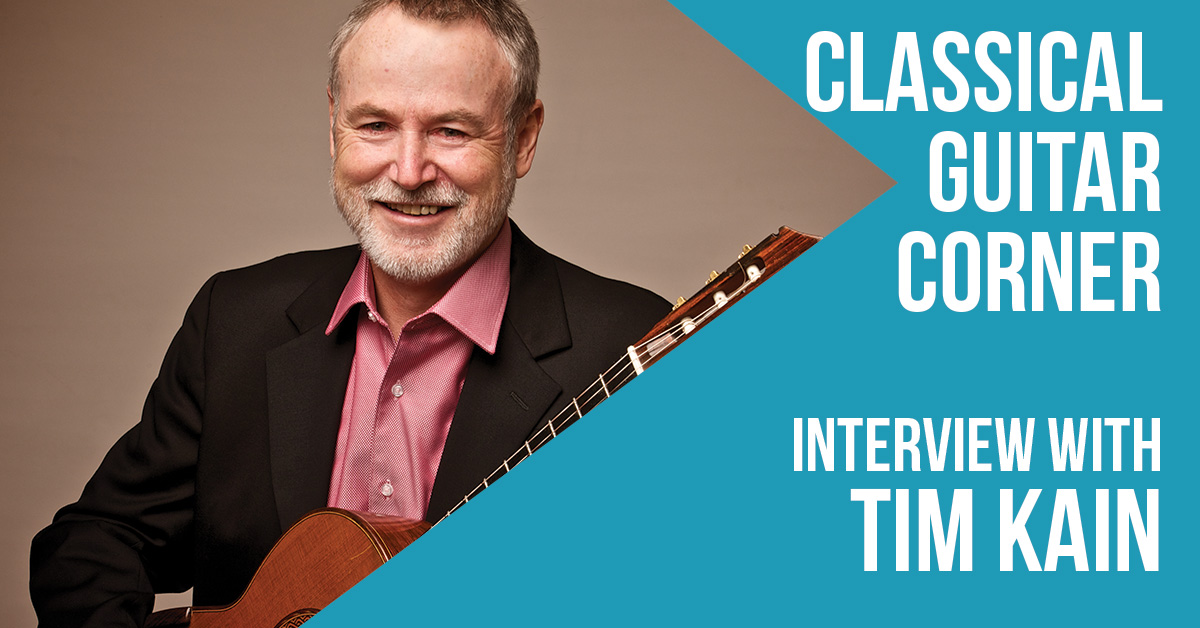
Tim Kain’s extended conversation with Simon Powis documents the experiences and teaching philosophy behind his years at the Australian National University School of Music. An opening contribution from Stephanie Jones describes a teacher who adapted to the individual and encouraged a supportive class.
The interview reaches beyond the achievements of particular graduates. It asks how a musical environment works: what happens in a lesson, how students learn from one another and how a teacher helps a player become increasingly independent.
Podcast: Play in new window | Download
Subscribe: Apple Podcasts | RSS
Originally published in 2026. These listening notes draw on the recorded conversation. Roles, projects, releases and event announcements refer to the time of recording. Practical reflections are suggested applications, not additional quotations from the guest.
Explore the conversation
Use these approximate timestamps to jump to a topic in the recording.
- 6:15 — A guitarist’s education belongs within the wider world of music
- 30:55 — A lesson is a collaboration around the music
- 39:06 — Good teaching makes room for independence
- 42:07 — A performance class needs both challenge and support
- 51:45 — A useful idea may need time to take root
- 68:38 — The community continues outside the scheduled lesson
A guitarist’s education belongs within the wider world of music
Kain traces a path through piano, popular music, flamenco and classical guitar. His recollections of the Canberra School of Music emphasise contact with musicians across the institution, rather than an education confined to one instrument.
He describes learning from teachers and performers with different strengths, and later gaining new perspectives through study overseas. Musical understanding and instrumental skill developed together.
That breadth remains a theme when he discusses his own students. Hearing concerts, playing chamber music and talking with other instrumentalists were part of the education. The guitar provided a way into music, while other music continually fed back into the guitar.
A lesson is a collaboration around the music
“The music itself was the focus.”
— Tim Kain, 35:17
Kain treats the choice to pursue professional study as a serious personal commitment. In discussing auditions, he looks beyond a polished performance to the student’s musical understanding, preparation and motivation.
Once a student joins the programme, the music becomes a shared focus. Teacher and student investigate its meaning and the practical problems involved in playing it. The student arrives with an interpretation already present in the way they perform, even if they have not yet explained it in words.
The distinction is useful at any level. A lesson need not be a sequence of instructions received passively. Bring your own attempt, identify what is difficult and take part in comparing possible solutions.
Good teaching makes room for independence
Kain connects motivation with the pleasure of discovering music together. His aim is not to produce players who all sound alike or remain dependent on his decisions.
He describes negotiating repertoire with students and recognising the educational value of working through an unhelpful fingering. A quicker answer from the teacher can sometimes save time, but investigating why a solution fails can teach something more lasting.
For a student, independence begins with small decisions. Try two fingerings, listen to the result and explain your preference. A teacher can then help refine the reasoning as well as the physical action.
A performance class needs both challenge and support
“Pointing out the good things that they’ve done is really helpful.”
— Tim Kain, 47:45
Kain describes the performance class as a stepping stone between the private lesson and the concert platform. Students could bring work that was still developing and learn from the experience of playing to others.
The atmosphere mattered. He wanted students to feel able to offer feedback, and he avoided publicly humiliating a player or dismissing another student’s contribution. Equal attention to students at different stages helped make the class a shared educational space.
Playing for others exposes what feels secure and what needs further work. In a supportive setting, that information becomes a reason to practise more specifically, rather than a reason to withdraw from performance.
A useful idea may need time to take root
Kain describes long-term teaching as a process that includes waiting. He might recognise an important direction for a student before the student was ready to understand or apply it fully.
That patience does not mean abandoning high expectations. It means returning to an idea at a useful time and recognising that development is not always immediate or evenly paced.
The same perspective can help a learner evaluate progress. Keep a record of a recurring musical question and revisit it after other skills have developed. A previously inaccessible idea may become clearer without having been a wasted lesson.
The community continues outside the scheduled lesson
Kain encouraged attendance at concerts of many kinds. He also valued the informal exchange between students: sharing repertoire, discussing technical discoveries and supporting one another’s performances.
He describes competition as something that could exist within a collaborative culture. Another musician’s success did not need to diminish anyone else. That attitude continued in his interest in former students’ careers and further study.
The final reflections connect teaching with his own active musical work. Performing, commissioning and learning new music kept the challenges of the student’s experience close to his own. The interview offers a picture of education as an ongoing musical relationship, not simply a course completed.
Ideas to take into your own music
These prompts are reflections on the conversation, rather than a routine prescribed by the guest.
- Participate in a lesson: bring a musical question and your own attempted solution.
- Share work in progress: choose a supportive listener and a manageable passage.
- Make feedback specific: identify an audible success and a useful next step.
- Join the wider musical life around you: attend a concert or exchange ideas with another player.
Original episode notes and resources
The original introduction and resources are retained below. Any time-sensitive announcements belong to the episode’s publication period.
Timothy Kain is one of Australia’s leading instrumentalists. Initially inspired by popular music and flamenco, Timothy Kain’s first classical guitar lessons were with Sadie Bishop at the Canberra School of Music. After graduating, he lived in Spain and England where he studied with Jose Tomás and Gordon Crosskey, and won first prize in the Third International Guitar Competition in Alicante, Spain, and the Royal Northern College of Music Bach prize.
Among his many overseas concert activities he has toured the UK and Australia, and released a CD with John Williams both as a duo and as a member of the ensemble Attacca. Tim is renowned for his commissioning, performance and recording of Australian works.
Along with a strong commitment to helping build a substantial repertoire of original Australian works for the guitar, Tim has dedicated much of his energy to the nurturing of the next generation of Australian guitarists in his role as Head of Guitar at the Australian National University’s School of Music. A long-term curriculum focus on original Australian repertoire has led to a younger generation of outstanding players also strongly involved in commissioning, performing and recording new Australian works. A large number of Canberra guitar students have achieved success in major national and international guitar competitions, including first prizes in Vienna, Tokyo, Italy, Spain and the USA, amongst others. The majority of his graduates have gone on to enjoy successful performing and teaching careers of their own. Tim was made a member of the Order of Australia, AM in 2013.